
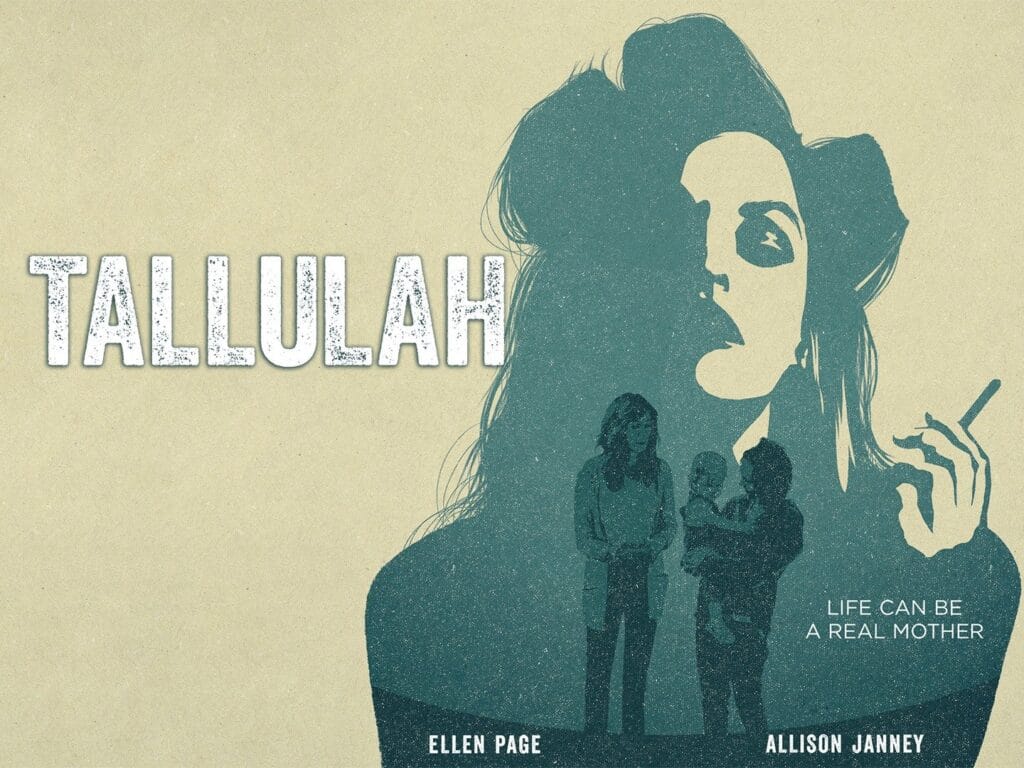
At the center of the plot of the film Tallulah, is the spontaneous kidnapping of a one-and-a-half-year-old baby girl by a young woman who, quite by chance, witnessed the baby being severely neglected by her mother, and decided, rather impulsively, not to ignore it. It started as an unplanned one-night rescue, which in the morning somehow spontaneously developed into an abduction.
I find this film interesting and relevant from an antinatalist perspective, not necessarily because of this basic plot (interesting and relevant as it may sound), but mainly because of the more complex ideas and issues that arise in the film. But in order to discuss them, we must slowly and chronologically review the film’s full storyline and tangles. And that’s what I will try to do in this text.
The Unplanned Kidnap
The film follows a young woman named Tallulah (sometimes simply called Lou) who lives a nomadic life with her partner, Nico. Nico left his mother Margo two years earlier because he couldn’t stand living with her anymore, and hasn’t had any contact with her since. They live in Tallulah’s van, traveling around the country, earning a living by stealing credit cards from random people, and occasionally using Margo’s credit card to buy gas.
One night, Nico tells Tallulah that he’s tired of this life and that he wants to settle down, meaning get married, get a job, and live in a house. He suggests that they go to New York, where his mother lives, so that Tallulah can meet her. But Tallulah is very upset by the idea and angrily tells Nico that if he doesn’t like the way she lives, he can leave. When she wakes up in the morning, she discovers that he has indeed left.
Tallulah is very careful not to get involved with people, places and things, but with Nico it’s different, so she decides to go to New York to look for him. She arrives at his mother’s apartment and tells her that she needs to find him and that he took all her money. Margo, devastated by her son’s sudden departure and the two years they haven’t been in touch, and also by the fact that her husband has come out and asked for a divorce, refuses to give Tallulah any money and sends her on her way.
Tallulah enters a fancy hotel and collects some room service leftovers that people left outside the door. Then one of the doors opens and a woman named Carolyn thinks Tallulah is a hotel employee and invites her in. Carolyn is not alone in her hotel room, she is with her baby daughter Madison who is walking around completely naked, without a diaper. But this doesn’t seem to bother Carolyn, who is also smoking next to her baby, and drinking beer even though she is already quite drunk. She asks Tallulah if she is good with children because she is looking for a babysitter for that evening. Tallulah says no, but Carolyn is desperate to find someone to look after her baby while she’s dating a man who isn’t her husband, so she’s willing to leave Madison even with a woman she just met. Carolyn offers high pay, and Tallulah immediately notices that there’s more money scattered around and some jewelry in the room, so she agrees.
While Carolyn is focused solely on getting ready for her date and not on her daughter at all, Tallulah notices Madison climbing onto the balcony and asks if she’s okay? Carolyn replies “Don’t worry about her. I need you right now.”
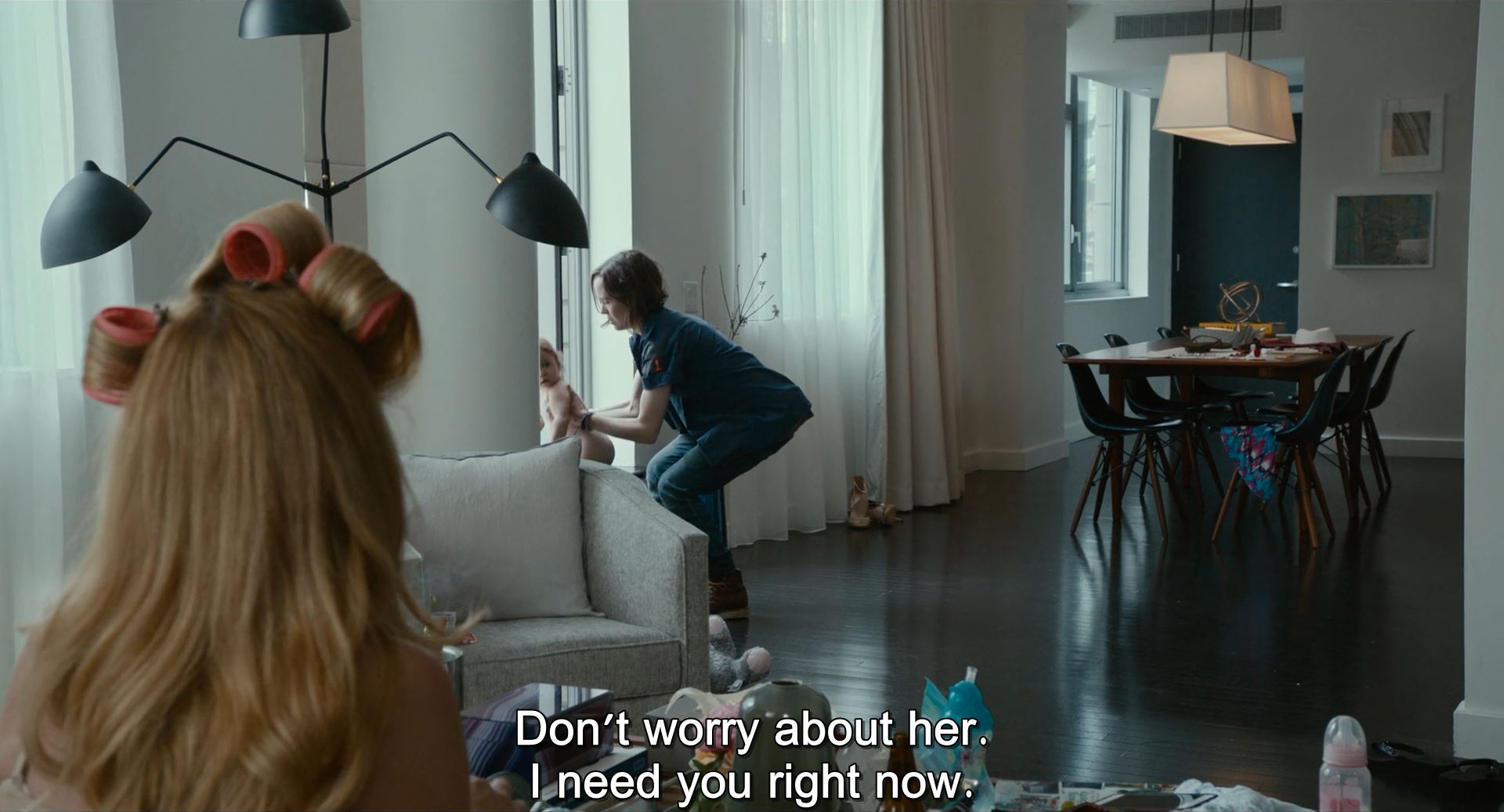
Tallulah takes Madison off the balcony and asks shouldn’t she wear a diaper or something? And Carolyn says: “Oh god, no, no. We pee in the toilet. She’s one years old.” And then asks if her legs are too white to wear a skirt, and if she is fat. Despite that Tallulah answered No to both questions, Carolyn says that once you have a baby your body isn’t as tight as it used to be. Tallulah says ‘I wouldn’t know because I never had a kid’, to which Carolyn responds with: “Well, fucking don’t, okay? Because, let me tell you, once you do, that is it! My tits are ruined! Ruined! Like a couple of dried up tea bags. He doesn’t even look at me anymore, my husband. I used to be hot! I really was! When I first met my husband, he couldn’t keep his eyes off my ass.”
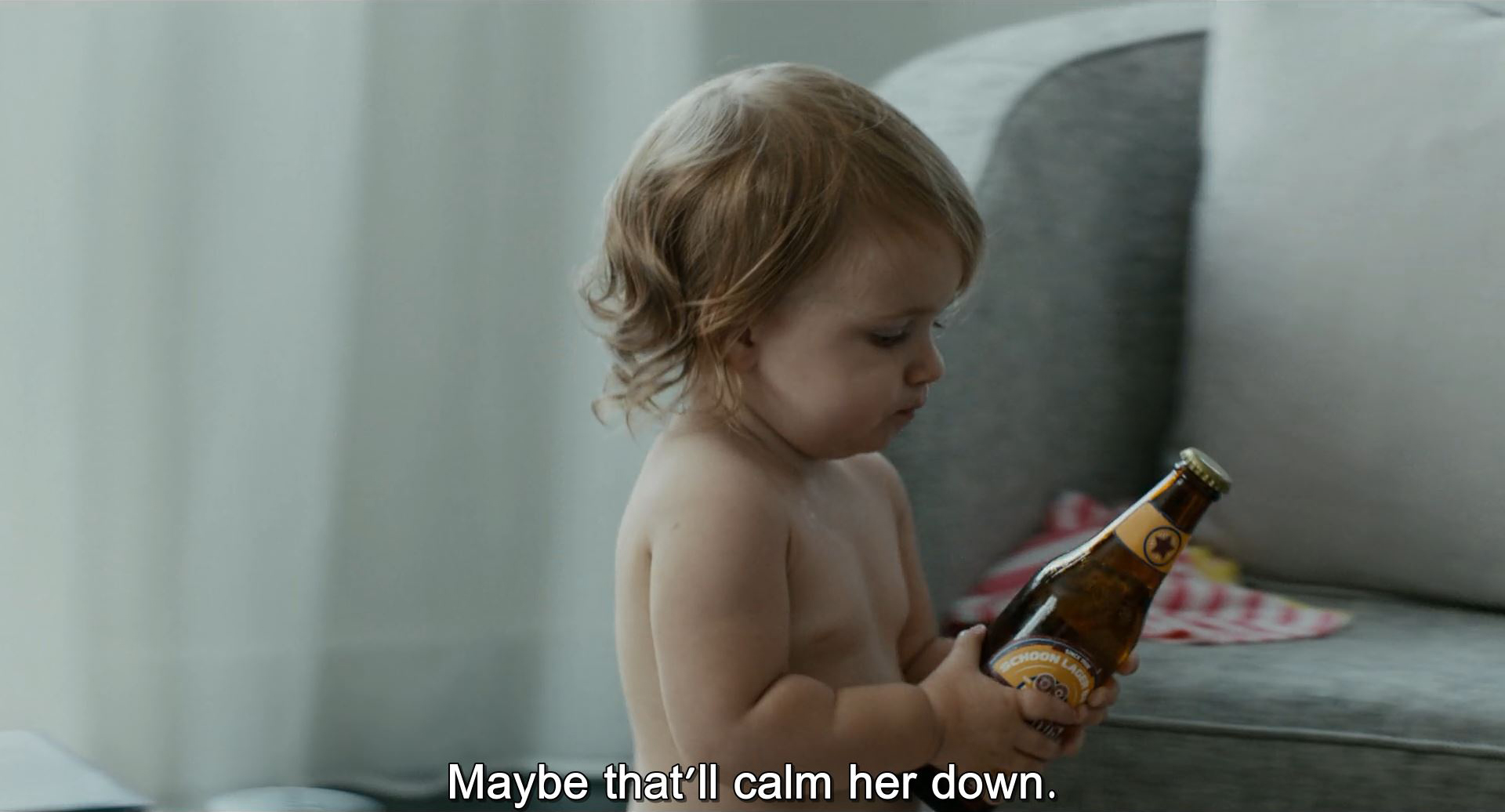
Then Carolyn asks Tallulah to put some make up on her. Meanwhile Madison walks around with a bottle of beer, and Carolyn says laughing “Maybe that’ll calm her down”.
Tallulah spots some pee on the carpet and Carolyn freaks out saying: “This is too much for me! What is wrong with her?” Tallulah tries to get some sense in her saying that she is little, and that it is just pee, but Carolyn says that Madison knows better and that she is supposed to go on the potty. “She knows what to do, she just doesn’t want to do it!” she says regarding her about one and a half year old baby and then about herself: “God, this is just so hard. Nobody tells you how hard it’s going to be. Everyone acts like it’s normal because everybody does it, but it is not. And I see all these women on TV and on the street, and they’re doing it, and I can’t… I don’t know how!”
Then, a second after this outburst, she fixes her dress and asks Tallulah: “Do I look fat?” and “You think he’ll want me?” and just before leaving her baby with a total stranger, she asks: “Do I look great?”
Tallulah steals some things from the hotel room and then takes a shower with Madison. They lie on the bed until Carolyn returns completely drunk. She tells Tallulah that the man she met didn’t want her and immediately falls on the bed. Tallulah tries to wake her up but she can’t. She puts Madison on the bed and just before she leaves Madison starts crying. Tallulah tells her: “I don’t know what to tell you, kid” and still intends to leave. But when Madison tries to get out of bed Tallulah realizes that she could hurt herself if she stays there with her passed out mother, so she takes her to her trailer where they spend the night. Even in Tallulah’s arms, Madison doesn’t stop crying.
In the morning Tallulah returns to the hotel to give Madison back to her mother, but it turns out that Carolyn called the police, so there were cops everywhere. Instead of explaining her actions to the police, Tallulah, who was a bit panicked, decides to run away with Madison in her arms.
She buys diapers, steals a stroller, and returns to Margo with Madison because she realizes that the trailer is not a safe place for a baby. She lies to Margo that she is Madison’s grandmother, a lie that easily convinces Margo to let them stay for one night.
They end up staying much longer than one night. During one of them, Tallulah tries to escape after stealing some money from Margo and leaving Madison with her. Only the fact that the trailer wouldn’t start kept her there. In the morning, Margo asks Tallulah if she tried to escape. Tallulah lies, saying that she is not used to sleeping in a bed and simply feels more comfortable in the trailer.
Meanwhile, the kidnapping investigation progresses when the police manage to obtain a photo of Tallulah and Madison from the hotel elevator camera. When Carolyn hears that they want to publish the photo in the local newspapers, she says: “Haven’t I been through enough?” to which the detective replied: “Do you want to find your child?” But Carolyn is more worried that her husband, who is on a business trip to London, would find out about what happened and leave her, than about her daughter and what happened to her.
Louisa Kinnie from Child Protective Services comes to speak with Carolyn. She notices the many empty alcohol bottles in the room and says that’s quite a collection. Carolyn responds with: “I’m the mother, not a suspect.” Louisa explains to Carolyn that it’s her job “to determine how you planned for the safety of this child”.
The policeman tells Carolyn, who so far stayed in the hotel, that they have contacted her husband. Hearing this, Carolyn starts packing, saying that she has to get out of there before her husband finds out. Then she says: “He thinks I am a terrible mother. He said it from the beginning. Every time she cried, every fucking time it was always my fault. And now he gets to throw it in my face!”
Carolyn is mad at Louisa and the police, telling Louisa that they are not doing anything and asks if she has to go and find her daughter herself? Louisa replies: “That might show me you care, which I’m not sure I believe.”
Carolyn tells her: “You can’t talk to me like that. I’ll get you fired.”
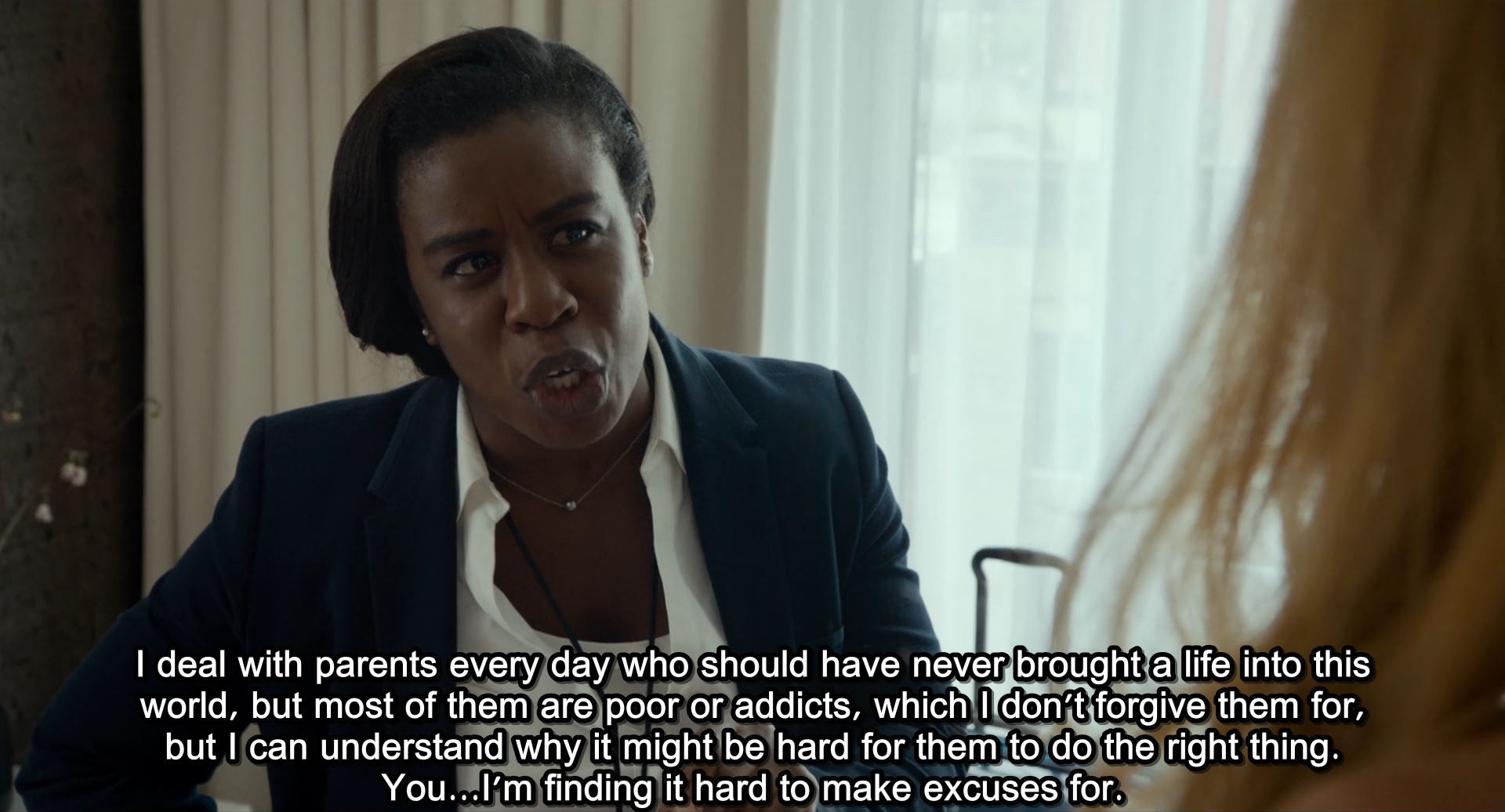
Louisa replies: “Oh, go for it. You wouldn’t be the first shitty mom to try. I deal with parents every day who should have never brought a life into this world, but most of them are poor or addicts, which I don’t forgive them for, but I can understand why it might be hard for them to do the right thing. You… I’m finding it hard to make excuses for.”
But Carolyn is so self-involved that she doesn’t even try to come up with excuses and says: ‘If you only knew what this was like for me. I am embarrassed. I can’t see him.”
The Lies Start to Unravel
Stefan, Nico’s father, wants to meet his supposed granddaughter and his son’s partner, so he invites them to lunch. He is very suspicious of that his son would suddenly decide to abandon his daughter. He asks Tallulah some questions and he is very unsatisfied with her answers, so he asks Margo: “Do you honestly believe any of this shit? That he would leave his child in the care of this girl? How do we even know that that kid is his?”
Margo: “For god’s sake, people leave all the time.”
But Stefan insists: “This girl is a liar.”
And then Margo bursts: “You’re the liar. You’re a liar, and you’re unkind.”
Stefan: “You just don’t want to see her for what she is.”
Margo: “Twenty years of deception, all of a sudden, you’re the pope of honesty.”
Stefan: “I’m looking out for you”
Margo: “You don’t get to be the hero!
All our friends think you did something brave, but you cheated and you lied, and you fucked around and you left! And now, you get to have all this! And I get to rot in the goddamn apartment in the middle of all your shit.”
Stefan: “Well then, move on. Sign the papers. Be done with it.”
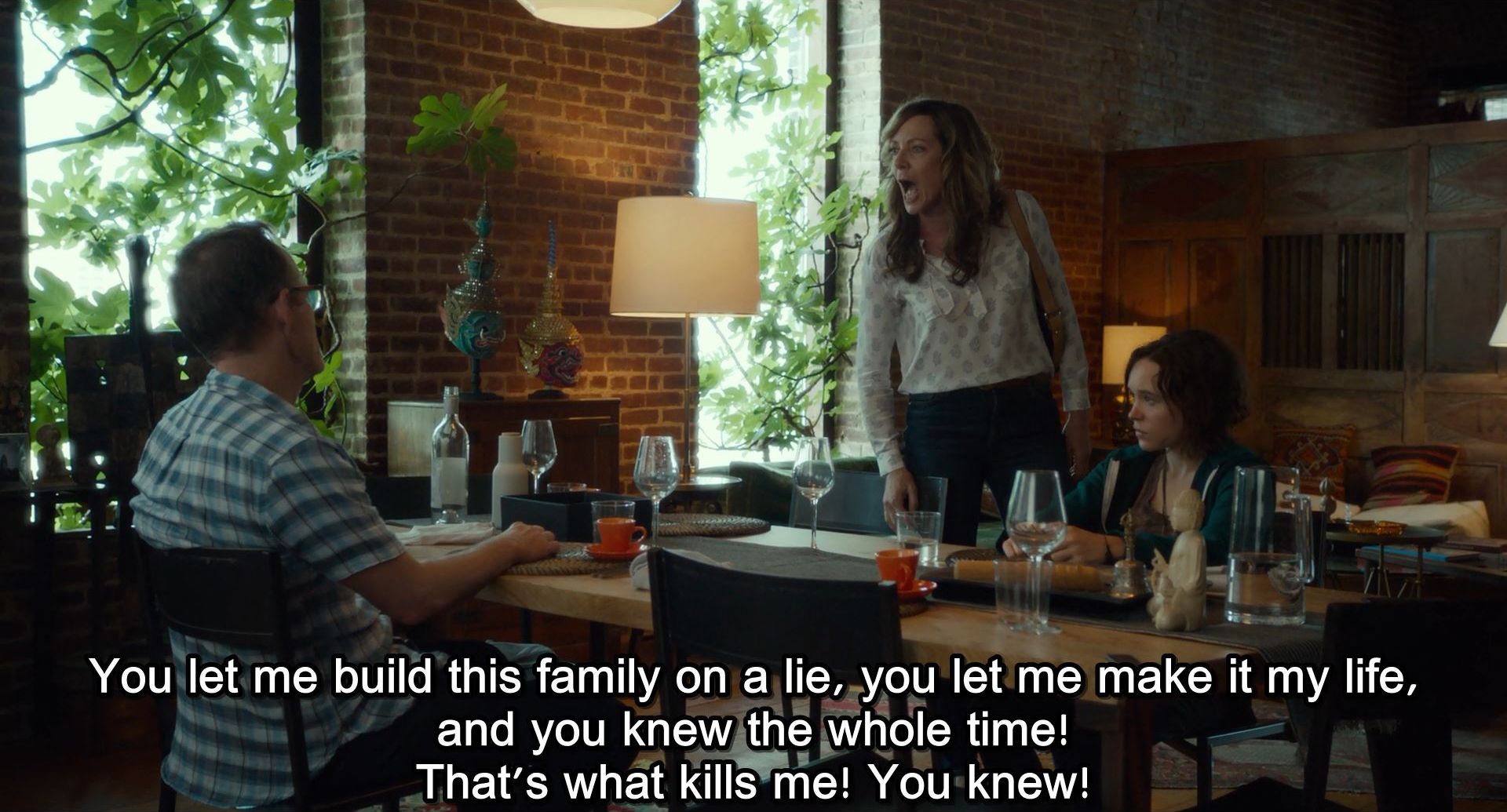
Margo: “Why? Why? Because god forbid I make it hard for you, as if it isn’t hard enough being a faggot! You let me build this family on a lie, you let me make it my life, and you knew the whole time! That’s what kills me! You knew!”
Stefan: “Goddammit, you knew the whole time too! You knew! If we really being honest here.”
Margo: “I loved you and I loved our family. And how dare you call someone else a liar? How dare you be mean to her? At least she has the balls to be who she really is.”
Margo takes Madison and Tallulah and storms out.
On their way to the subway, Carolyn spots the three and starts chasing them but fails to catch them. When they arrive at Margo’s apartment, she demands an explanation for why they ran away and why a woman was chasing them. She looks into Tallulah’s purse and finds several credit cards. Tallulah is terribly manipulative and accuses Margo of being a liar and a thief. Margo replies that if she’s in trouble she’ll help her but she needs her to tell her what’s going on. “This is your family,” she says. Tallulah replies, ”I’m not your fucking family” and leaves with Madison.
Margo goes out to look for her but can’t find her. When she returns to her apartment, she sees her son waiting for her at the front door.
Stefan sees an ad in the newspaper about the kidnapping and reports it to the police, who come to Margo’s apartment looking for the baby. But Madison is with Tallulah, who takes her to the hospital because she’s been sick. Nico finds Tallulah and tries to convince her not to go to the hospital because if she does, she will get caught. He suggests, since he had nothing to do with the kidnapping, that he tell the police that he found the baby in the park, and in the meantime Tallulah runs away. She agrees and leaves Madison with him at the hospital.
Before she runs away, Tallulah calls Margo from a pay phone at the train station to tell her she is sorry. She admits that the baby is not hers and says that she took it because she thought her mother would not be able to take care of her. She tells Margo that the baby is in the hospital with Nico. The police track Tallulah’s location and send officers to the station and the hospital.
Tallulah decides not to get on the train but to return to the hospital. She takes Madison from Nico, but the police enter and the detective asks her to hand over the baby. Tallulah replies pointing at Carolyn: “What, to her? She doesn’t want it. She’s so little. Now she’s not fucked up by you yet. You don’t even care!?”
The detective tells her again to hand over the child. Tallulah insists telling him “She doesn’t want her. Ask her. Ask her right now. Do you?”
Carolyn says: “I do. I do…please.”
Tallulah hands Madison to Carolyn and gets arrested by the police.
In the police car the detective asks her “So, you make a habit of taking toddlers into protective custody?”
I Wished For It
Although the film Tallulah is unlikely to make people who are not initially sympathetic to antinatalism consider opposing procreation on ethical grounds, it is at least a film that expresses support for the childfree position. This is largely because Carolyn can be seen as a kind of poster girl for the childfree perspective, as she is portrayed as a woman who did not want to be a mother and certainly shouldn’t be a mother. However, after reading a number of reviews of the film, I have come to realize that some people have quite different perspectives on the film and the character of Carolyn, and I would like to briefly address three points that are raised in this regard.
The first point has to do with the ending.
Some argue that the hospital scene at the end of the film, where Tallulah agrees to hand Madison over to Carolyn after asking her if she even wants her and Carolyn says yes, is supposed to show us that Carolyn has changed over the course of the film and that she has realized that she really wants to be a mother.
But why exactly did Carolyn supposedly change her mind? Throughout the film, all she cares about is that her husband will leave her if he finds out what happened. She doesn’t bother to participate in the search for Madison, she doesn’t want the case to make the local news even though it might help find her daughter, who may be in danger, because she doesn’t want her husband to hear about it, she doesn’t bother to ask who the woman who kidnapped her daughter is and whether she is dangerous, she doesn’t put up ads with her picture around town, she hasn’t cooperated with the investigation, instead she just keeps getting drunk.
To answer Tallulah when she asked her if she wanted her baby with an “I do,” especially in front of so many people, including her husband who she was so afraid would leave her, and in front of the police and child protective services, is far from an indication that she has truly changed. In this situation, it’s not like she had any other choice but to say she did.
Some suggest that since Carolyn’s (apparent) expression of desire to be a mother at the end of the film is enough for Tallulah to hand Madison over to her, and for the authorities, including Louisa Kinnie of child protective services, to approve of this decision, this film ultimately promotes a rather conservative view of the importance of the biological family. That is, if the biological mother wants to be the actual mother, that’s for the best. Although that’s not necessarily the case in general, and certainly in this case it’s far from the best thing for the child. However, I think that the fact that Carolyn gets Madison at the end of the film does not reflect support for this position, but rather criticism, and this is by presenting the bleak reality in which in many cases, despite lacking any parenting skills, people are seen as the natural and preferred option simply because they are the biological parents.
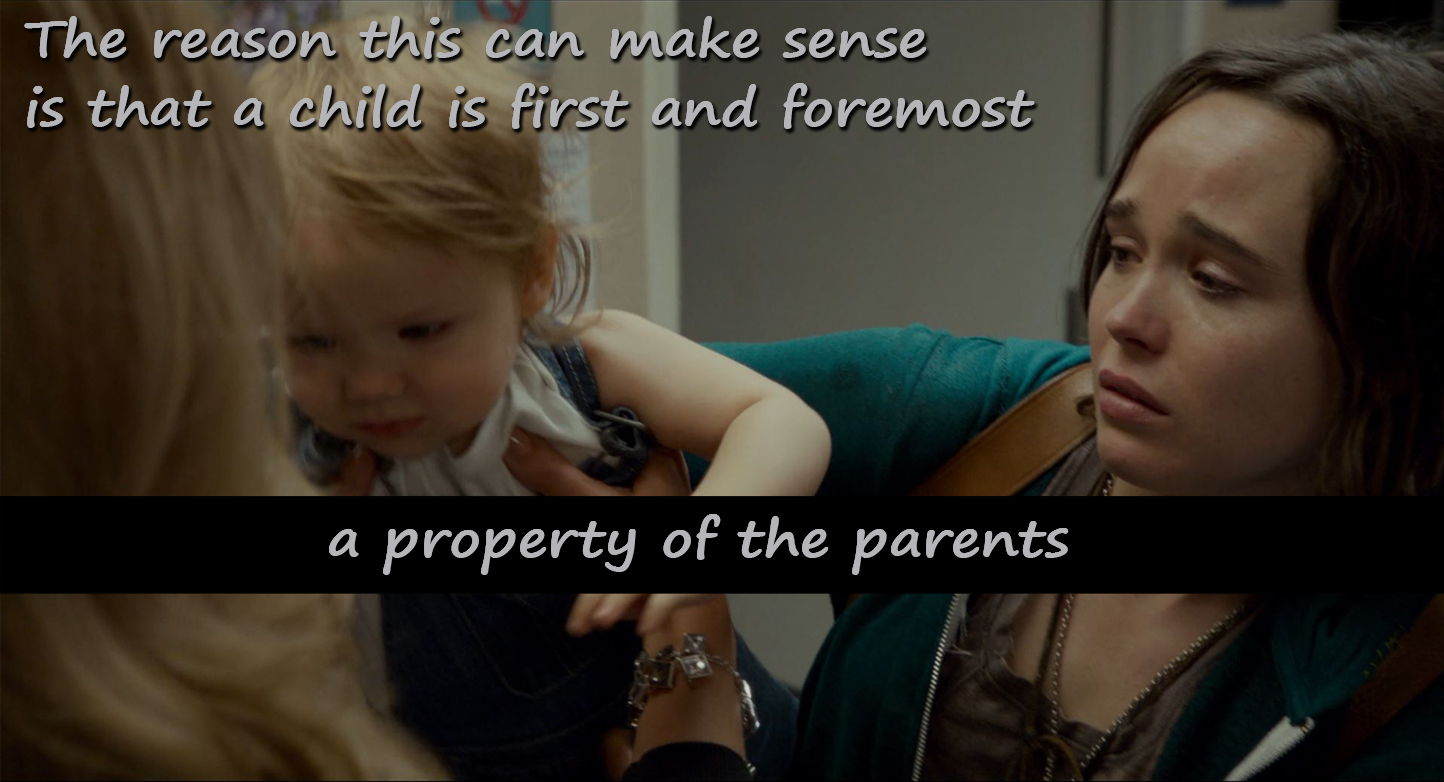
The reason it can even be seen as a logical possibility that, despite realizing that Carolyn was a neglectful mother, the police and child protective services returned Madison to her, is that a child in this world is first and foremost the property, an object, the plaything of the parents. Therefore, the perception is that a child’s natural place is with the biological parents, even in clear cases of negligence and incompetence. This is also why someone can be quite disinterested in creating a child but still act like it’s no big deal. This is why it can make sense that all Tallulah, the police, and child protective services need to hear is the biological mother say “I do”, so that they can return Madison to her very unsafe hands.
The second point concerns Carolyn’s interaction with Louisa Kinnie of Child Protective Services. Some argue that this short dialogue (which was mentioned and quoted earlier in this text) can be seen as portraying the harsh judgment towards women who are perceived as bad mothers, especially by other women. In this scene, Carolyn attempts to reverse Louisa’s judgment by saying that it is easy for her to judge because motherhood (Louisa is pregnant with her third child) comes easily to her, but that is not the case for all women, and therefore Louisa’s criticism of Carolyn, according to this view, represents an unempathetic, judgmental view of women who “don’t know how to be mothers”. However, apart from the fact that it is completely unacceptable that this judgmental view is somehow exclusive to women and that for some reason men are not even expected to be “good fathers”, this judgmental view is not wrong in itself. Carolyn should be judged for her decision to create a human being even though she did not want to be a mother before she became a mother, and for not taking responsibility for her decision to create a human being anyway by at least doing her best after she had already made that decision. Like every other parent in the world, she acted irresponsibly when she created a human being, but her case is even worse because she did not even want to be a mother but did so explicitly to strengthen her relationship with her husband, and even continued to be extremely selfish by neglecting her child while only caring for herself. So she of all people certainly doesn’t have a right to tell other people that they have no right to judge her motherhood. It is clear that all the creations of all children are always instrumental, but people are not always aware of this in advance. Carolyn’s main judgment should not be that she is struggling to find her maternal instincts (as she says), but that she became a mother knowing that she lacks the basic skills to be a mother, without even wanting to be one, and that she is neglecting her child and putting her in dangerous situations. This is the case with Carolyn. The problem is not Louisa judging Carolyn, but Carolyn’s lack of judgment. Carolyn made a terrible and critical decision about someone else’s life, so the least we can do is confront her with it, and of course Louisa needs to consider what would be best for the child. Only in such a pro-natalist society it could be implied that the problem is with Louisa judging Carolyn’s actions and not with Carolyn judging Madison to this life.
In any case, I can certainly sympathize with Carolyn for being a lonely person with very low self-esteem, who is afraid of being alone and unloved. But I cannot sympathize with her decision to create a new person (let alone the fact that she knew she didn’t want to be a mother or was capable of caring for a child, even under a very loose definition of being capable of caring for another human being) in an attempt to save herself from that fate. I find it hard to sympathize with such an extreme case of selfishness, and more importantly for our matter, I think that expecting to sympathize with such an extreme case of selfishness can only be accepted on the basis of a profound disregard for the vast significance of the very decision to create a new person. And I resent that very much.
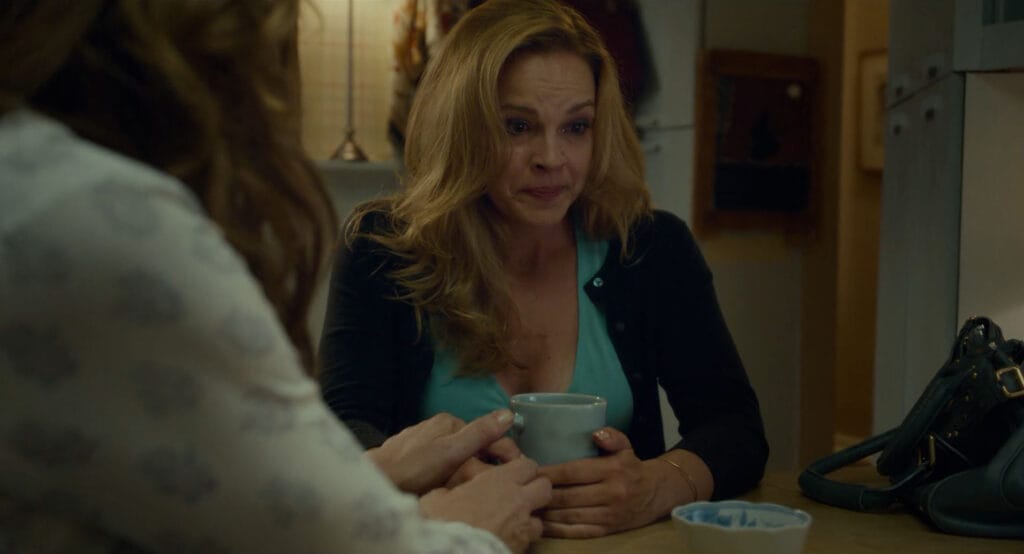
The third point involves the scene of Margo comforting Carolyn while Carolyn is waiting at her apartment for the police to trace Tallulah. They are having the following conversation:
Carolyn: “He’s gonna leave me. My husband. I thought maybe if I found her myself, he might forgive me. My whole family kept telling me how lucky I was to have him. I don’t know what I’d be doing if it weren’t for him. They kept telling me I should count my blessings, that he even married me. Now he’s done with me. And I lost my child.”
Margo: “Can’t imagine what this must be like for you.”
Carolyn: “I wished for it”
Margo: “What?”
Carolyn: “I wished for it. I wished so many times for it to happen. If only I’d never had her! If only she was gone!
Margo: “You don’t mean that”
Carolyn: “I did, I did mean that. Isn’t that terrible?
I kept waiting for it to happen, some mommy feeling, but it never came. And I was so mad at her. He didn’t pay me any attention before, so I thought, maybe, if I had a baby, he’d be interested. But it’s the opposite. It’s… it’s… so lonely…Am I a horrible person?”
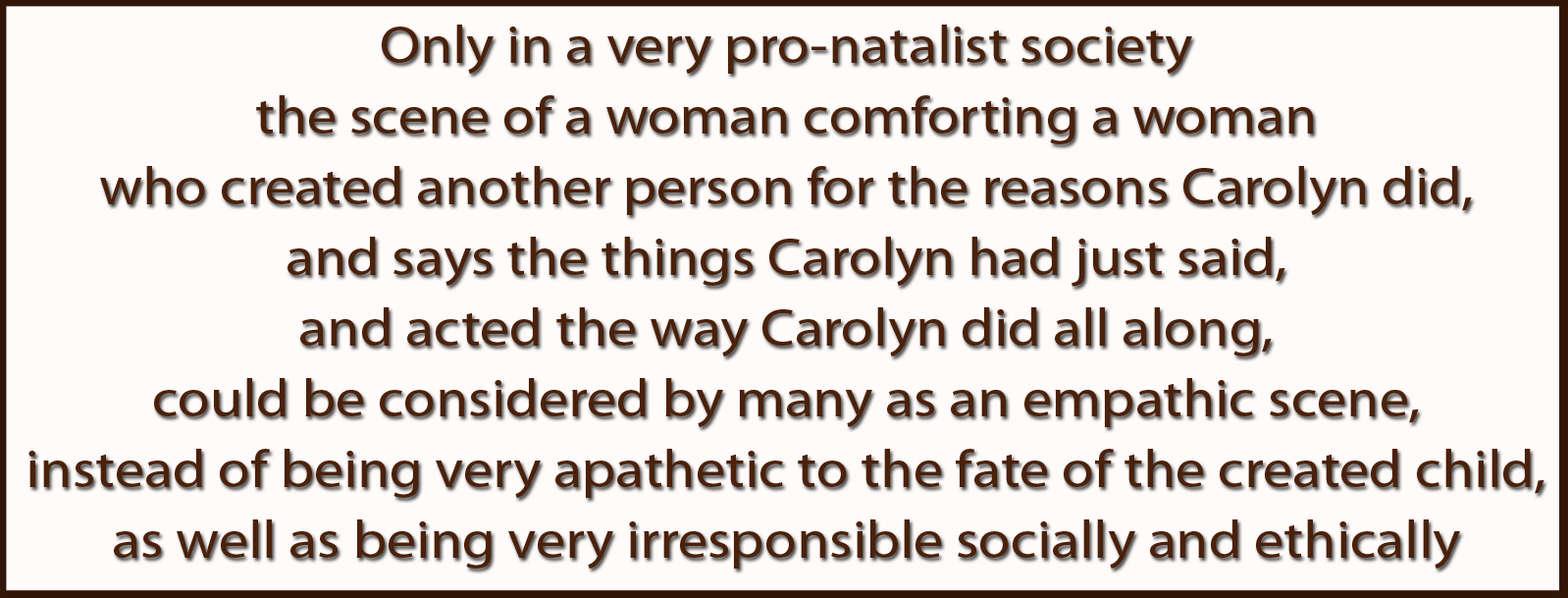
This scene is seen by many as the desired reversal of Carolyn’s interaction with Louisa described in the previous point. But we must not show empathy for people who are so indifferent to the fate of others. Given that Margo has been with Madison almost the entire time since Carolyn last saw her, and since Margo knows Tallulah, at least better than Carolyn, meeting her was an opportunity for Carolyn to ask about her daughter. To ask how she is, what she eats, does she sleep well, does she cry a lot, how they spend time with her, etc., but with so little interest in the person she created, Carolyn only talked about herself.
We shouldn’t comfort and sympathize with Carolyn. There’s nothing wrong with giving her the cold shoulder. She made a terrible decision, with terrible consequences, and she continues to make bad decisions in that regard, so she needs to be told that a child is not a glue for failed relationship, a tool to keep your husband around, or a toy. She also needs help because she’s suffering, and more importantly, because otherwise her child will continue to suffer, but we can’t make her feel okay with what she did because it’s wrong. Correction starts with pointing out bad actions, not accepting them with empathy.
Indirect Antinatalism
But in any case, whether you agree with my perspective on Carolyn’s character or not, although she can certainly serve as not only a strong support for the childfree view but also for antinatalism, because no one knows in advance what kind of parent s/he will be, and whether s/he will bond with the child, etc., and therefore no one should procreate, I think a much stronger antinatalist argument is made not through Carolyn, nor through Tallulah, but through Margo.
Unlike the other two main characters in the film, Margo comes across as logical, level-headed, stable, empathetic, and responsible. Given her approach to people, especially Madison and Tallulah, we have reason to assume that she was a caring mother to her son Nico. Additionally, Margo is an academic author who writes about marriage. She is considered an expert on marriage. Finally, she states that she has always only wanted to get married and start a family. “My plan was to be a mom” However, despite all this, Margo is far from being a happy person with a happy family. She feels like a failure as a mother and a wife.
I find Margo to be the most tragic and antinatalist character in the film, because she is the one who, at least normatively speaking, did things the “right way”, and yet she is miserable and feels like everything in her life has fallen apart.
On the surface, Tallulah and Carolyn are pretty exceptional cases, but Margo is not. Margo proves that just existing in this world is enough to make your life pretty bad. So, for me, from an antinatalist perspective on the film, Margo is not the control group of characters like Tallulah and Carolyn, but they are the control group of the character of Margo, who to me represents the argument that there is no such thing as good parenting, or a good family life, and that one can do things the right way, so to speak, and still be completely miserable.
Margo is also the more realistic character. While it’s unlikely that many women discover after twenty years of marriage that their husband is gay, there are many women whose lives have fallen apart for many other reasons, and whose lives, at least from a certain point on, have been based on a lie. And if people are honest with themselves, many people, probably most, would admit that their relationships with their children, at least from a certain point on, were bad.
And Margo tried. She seems like a decent, caring, intelligent, and self-aware person, and yet her life is a mess. She’s very lonely and miserable.
This film can be seen as presenting three types of parenting: Negligence, Abandonment, and Normal. The negligence type is represented by Carolyn, and we’ve already discussed it, so I’ll move on to abandonment. Tallulah, as she herself says, is a product of abandonment, and we can see what that does to people. She’s not willing to trust anyone. She doesn’t want to be needed. She thinks it’s a naive mistake to depend on others. She’s a nomad who’s afraid to settle. She is rough. She lies all the time. And she supports herself by stealing from others.
Margo represents the normal kind. We have reason to believe that she was a caring, sensitive, and attentive mother, because she seems like a caring, sensitive, and attentive person in general. She also always wanted to be a mother. However, at some point her son got fed up with her and left without telling her, and without contacting her for two years. The only way she can track his whereabouts is by tracking her credit card charges, since he stole it from her.
Tallulah and Carolyn may be more tragic characters in themselves, but Margo represents a much greater tragedy in principle, and that is that even when you really want to, really try, are aware of it on an academic professional level, have a basic set of relevant skills, and have no traumas or significant emotional burden, it doesn’t work. If even a woman who is a so-called marriage expert, who created a family because she really wanted to and not because of any external pressure (and perhaps even despite external pressure not to start a family because of her academic career), failed, what are the chances that seemingly less capable people will succeed? Margo is the most tragic case precisely because she is the normal case. And that is why her failure raises the argument that the normal is ethically abnormal.
We’re All Horrible
Margo is an interesting character from an antinatalist perspective not only in a passive manner, meaning merely because she functions as a symbolic portrait of the gap between people’s desires and abilities and the actual course of their lives, but also in an active manner, that is, through the ideas and insights she expresses throughout the film.
Here are a few selected examples.
In one of the nights during their stay, while Madison is finally relaxed sleeping in Nico’s bed, Tallulah says to Margo: “Isn’t she just the coolest, weirdest little thing you’ve ever seen?”
Margo approves and Tallulah continues: “She’s just so little. She’s got those, like, tiny little toenails. It just blows my mind.” But Margo refuses to be totally seduced by the cuteness and littleness of babies and astutely says: “Then they grow up and hate you and it really blows your mind.”
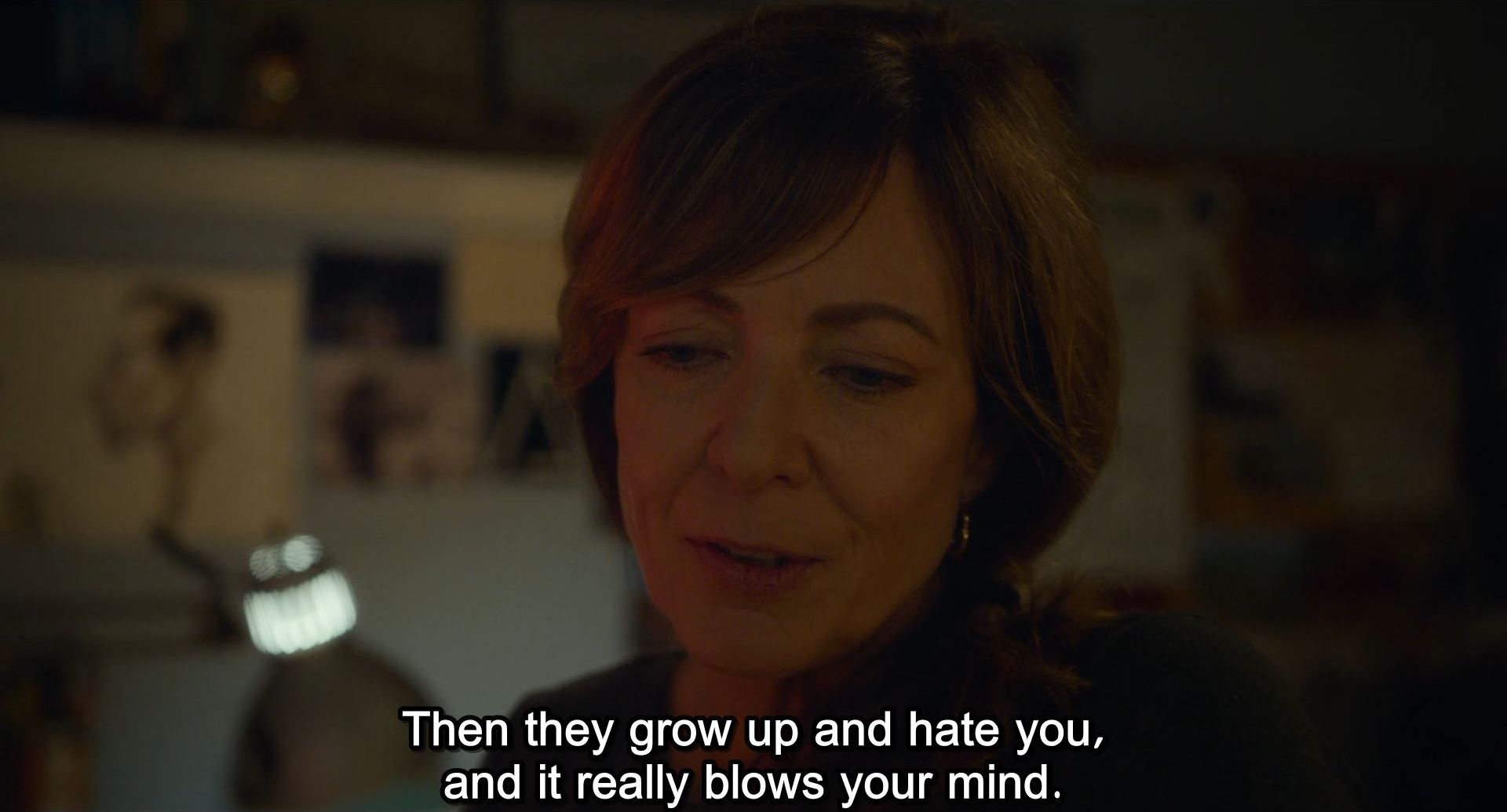
Many people procreate because they are captivated by the charm of babies, forgetting that babies quickly become children, and that they will be grownups most of their lives. The infant stage is very short, followed by the main stage in the life of anyone who is created. Creating a person is getting into a lifelong relationship with someone you have no idea what he/she is like. It may be a person you may not like, and that person may not like you. Creating a person is a lifelong commitment. But people are incredibly myopic.
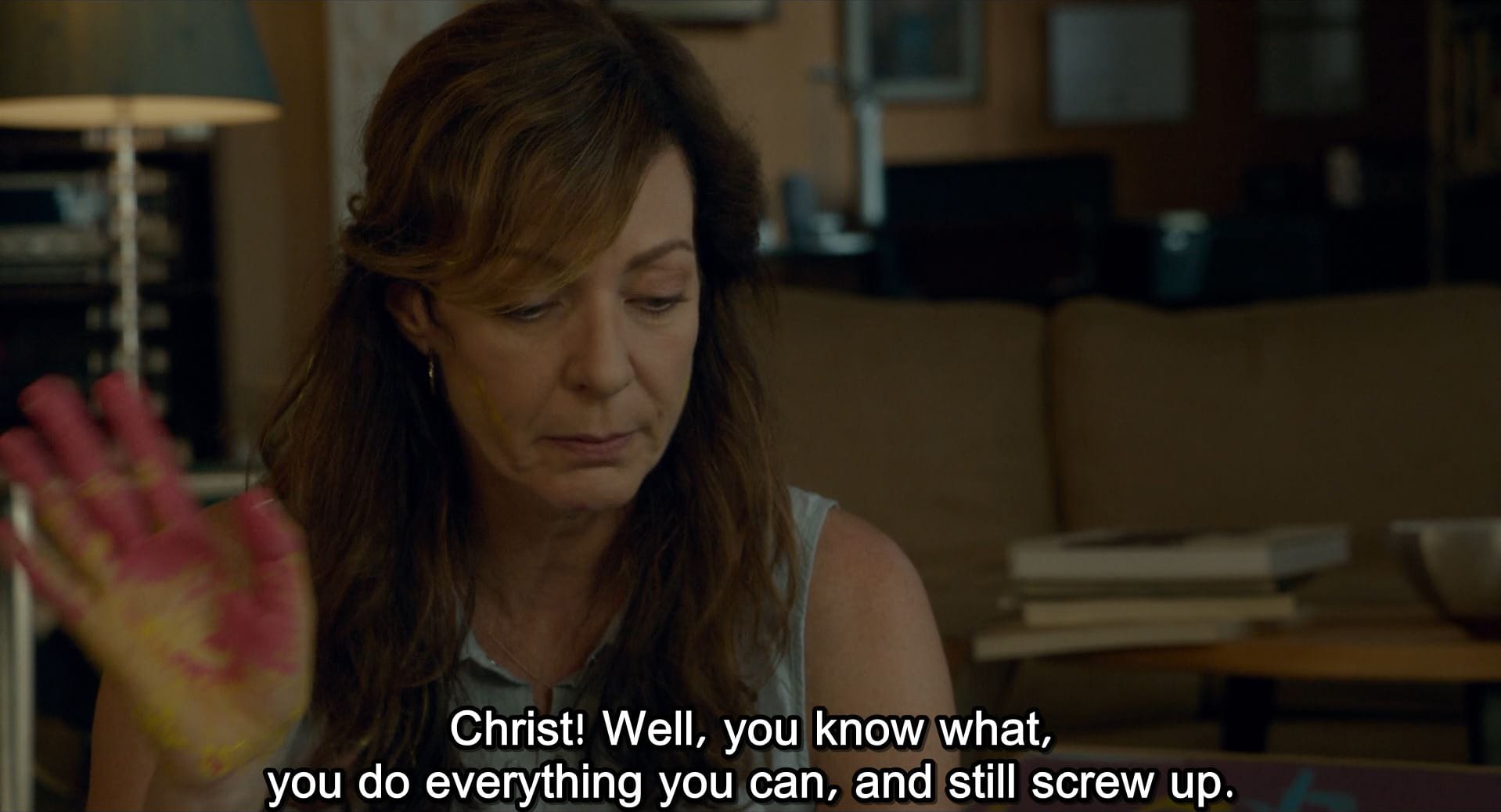
Margo makes another sharp and painful observation of a similar kind after Tallulah tells her that Nico thinks she is such a tight ass. Margo was offended and asked “Is that why he left?” Tallulah replied that he said that he is her son not her husband.
Margo asked if Nico used the word tight ass? And Tallulah confirmed. Then Margo said: “Christ! Well, you know what, you do everything you can, and still screw up.”
The next day the three of them sit in the park and Margo tries to figure out what is Tallulah’s plan. Tallulah replies with a question:
Tallulah: “Did you have a plan?”
Margo: “Yes, of course I did. Well, I suppose it changed. I was finishing my thesis when I got pregnant. All of our friends were these hyper-academic, ambitious people and Stephen was right there at the center of it all. I suppose it wasn’t cool to admit it, because it was painfully conventional, but I really just wanted to be married, and to have a family. My plan was to be a mom.”
Tallulah: “How did that work out?”
Margo: “I guess it didn’t. They both left me.”
Tallulah: “You’re naïve, that’s your problem. Your plan depended on other people. People suck, and they’ll disappoint you every time.”
Margo: “That is no way to live.”
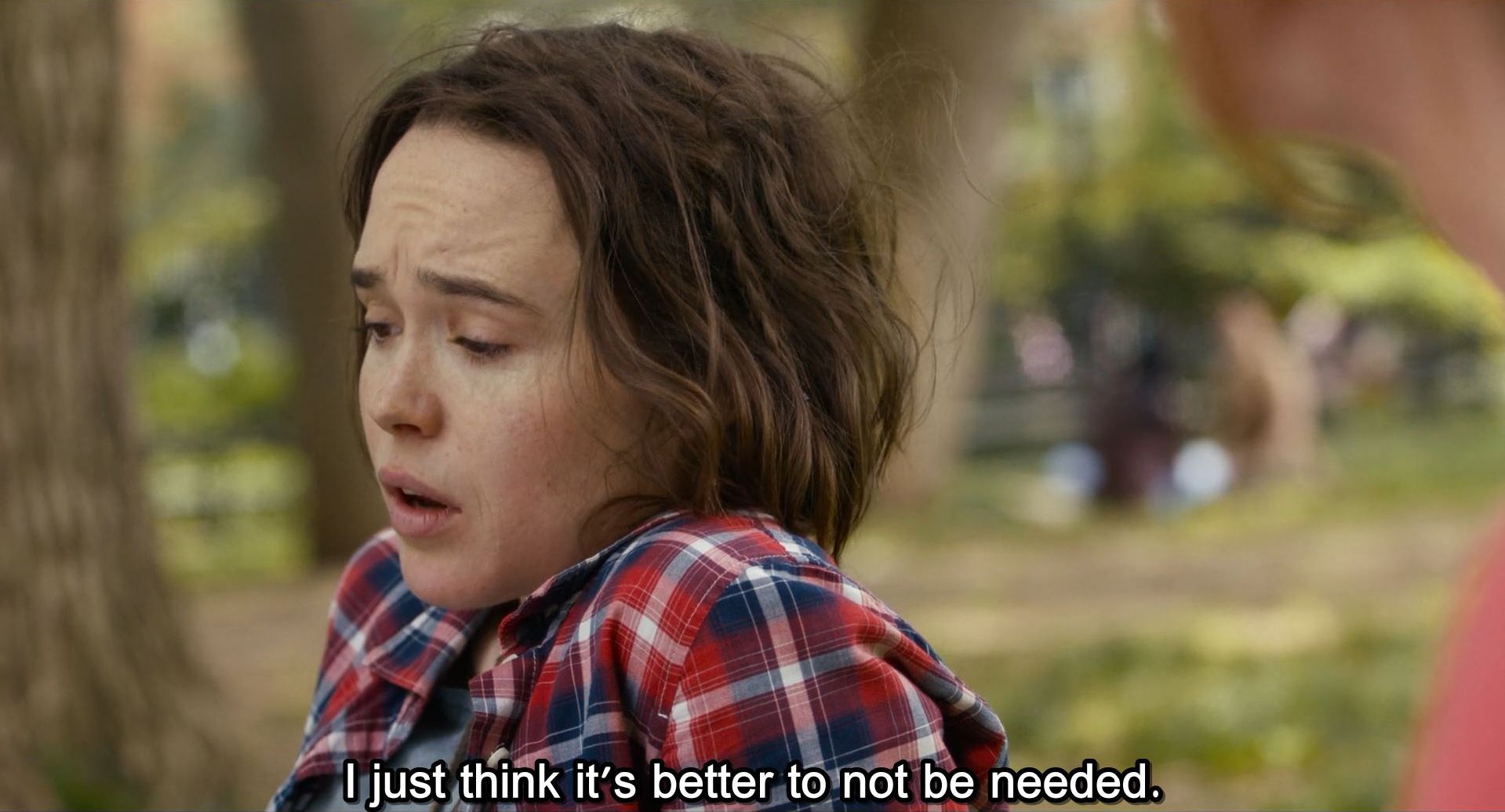
Tallulah: “Look, I’m not saying that we should go around, dicking each other over, all the time, but…like, look… when I was six, my mom took me to this weird apartment building, and she sat me up on the stoop, and told me to wait. And she was just gonna go run some errands, and come back. And um… I sat there for hours, and it got really cold, and then this old Buick pulls up and this tall skinny guy gets out. A guy I’d never ever seen before, and he was like, “Hey, I’m your dad and you’re gonna come home with me.” Um.. and then I never… I… I never saw her again.
But I wouldn’t have cared if I hadn’t needed her. So… I just think it’s better to not be needed.”
Margo points at Madison and says “She needs you.”
Tallulah: “She doesn’t know any better.”
Then Tallulah says: “Thank god there’s gravity, right?”
Margo: “What do you mean?”
Tallulah: “Hmm, like just sticking us here on the ground. Like some magnet at the center of the earth and the lava, just keeping us stuck. What if it stopped, you know? Or what if it stopped just right in the spot where I was? I feel like that could happen. And if there wasn’t anything keeping me here anymore and I just floated off the planet… I guess I’d grab a tree or branch or something to stay connected to the earth. You know, so I wouldn’t go floating up into space!”
Margo: “I don’t think I’d grab on. I’d go.”
It is important to note, for that matter, that in the last scene of the film, while lying on the grass of that same park, this time alone, Margo begins to float. But contrary to her statement that she will let go, she clings to a branch, as if now she has a reason to stay.
But it is not really clear why. She has not yet gotten over being deceived by her husband, she was deceived by her son’s girlfriend into thinking that she has a granddaughter, and in a way, also a kind of daughter, only to lose her supposed granddaughter to whom she has already become attached, and to lose her supposed daughter who is going to prison, and it is doubtful that someone like Tallulah will remain in Margo’s life in the future. The only good thing that happened to her is that her son came back. But the wound of his sudden departure, without even informing her and without contacting her for two years, is probably still bleeding and accompanied by the fear that it might happen again.
So I am not sure why Margo holds on instead of letting go.
Anyway, back to her insights. At night, Tallulah looks at Madison while sleeping and thinks she might be dead, so she runs to Margo in the other room, scaring the shit out of her. After Margo checks and reassures that Madison is sleeping, Tallulah says: “But she is gonna die.”
Margo: “What?”
Tallulah: “Well, not now, not soon.”
Margo: “I certainly hope not.”
Tallulah: “Hopefully, like, really far into the future, but still she’s… she’s gonna die and that – makes me sad.”
Margo: “Oh, we’re all gonna die.”
Tallulah: “Right? We’re all gonna die. It’s super sad.”
Margo: “Yeah.”
Tallulah: “I like it here. Either you’ll die first, and I’ll be sad or, I’ll die first and you’ll be sad. Either way, we’re all gonna be dead.”
Margo (laughing): “It’s so fucking sad.”
Tallulah: “It’s the saddest thing ever!”
Margo (laughing): “So sad!”
Tallulah (laughing): “So sad!
It’s really sad.
Oh, what is the point?
It’s sad.”
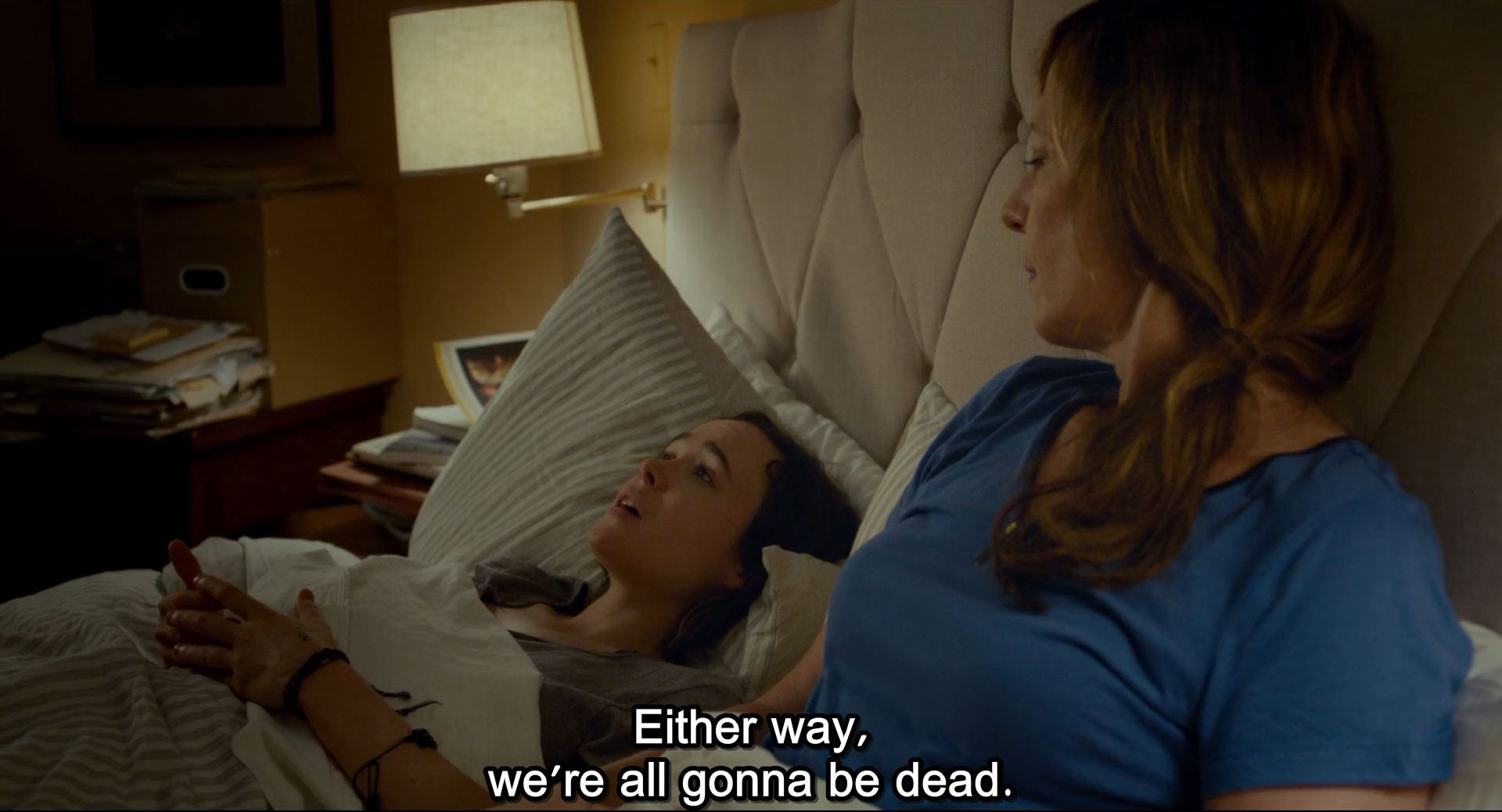
Although Tallulah is the one who brought this up and ended it by asking what the point is, Margo, who is the experienced and educated adult, not only agrees but also doesn’t say anything comforting, or offer any point to life despite that everyone is going to die at some point. They both just laugh out loud, probably to keep from crying considering how sad it is. They find this thought so sad that the only way to deal with it is to laugh, to laugh at the absurdity of life.
But there is one more thing that everyone must do, given this sad fact, and that is of course not to create a new person. Creating a new person is creating someone who is going to die, who knows that they are going to die, who knows that everyone they care about is going to die, and who will experience the loss of many people they care about because they will die before they do. So not only is it, as Margo says, “It’s so fucking sad” it is also so cruel to do this to someone.
Last but not least is Margo’s reply to Carolyn’s earlier mentioned question “Am I a horrible person?” Margo’s reply is: “We’re all horrible. And we’re all just people.”
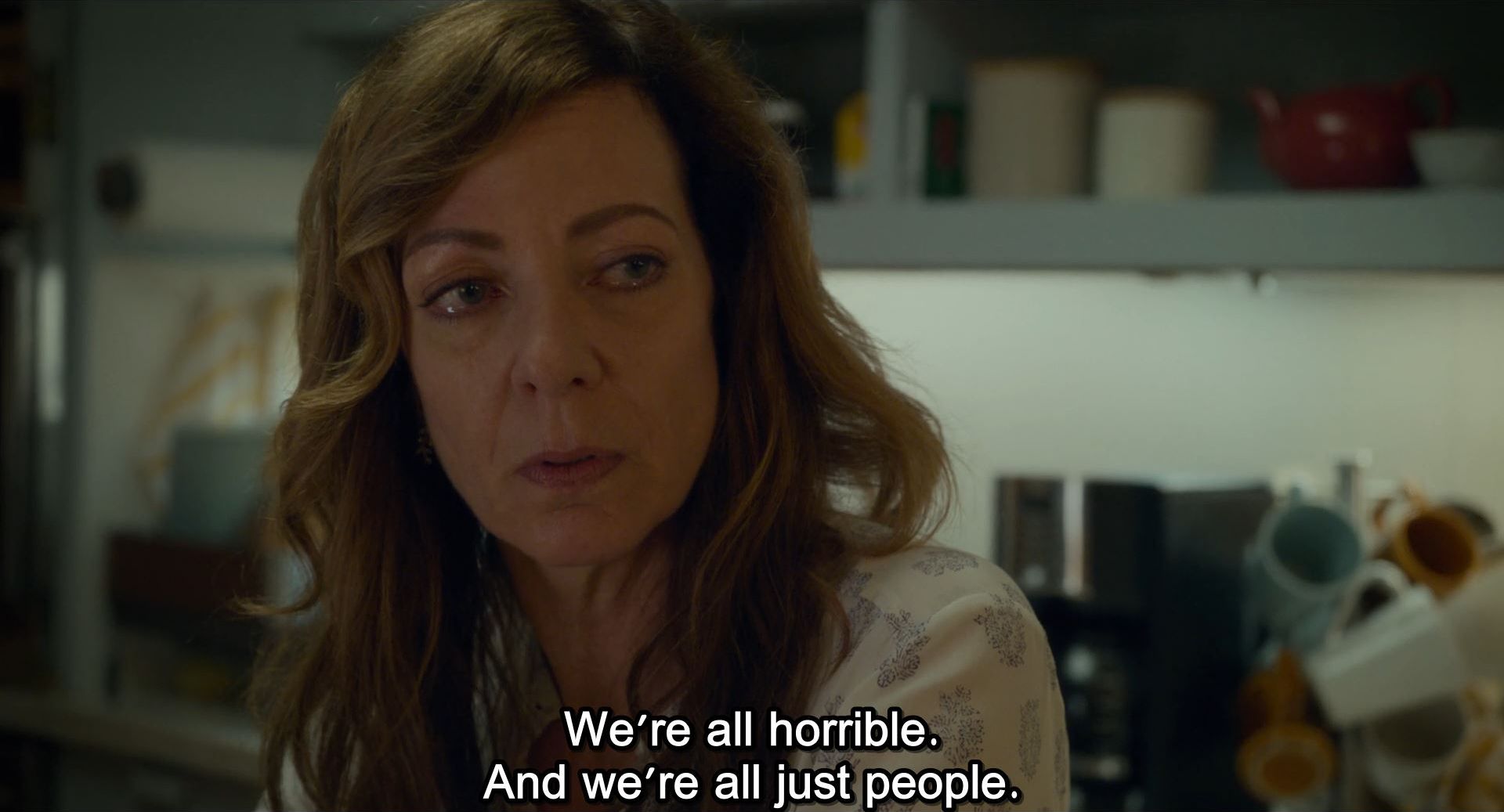
The fact that we are all just people is perhaps a sufficient reason to forgive people for certain mistakes, or at least to understand where those mistakes come from. But the fact that we are all horrible is certainly a sufficient reason not to create more people.
And the fact that ”we’re all just people” is not a valid reason to excuse people who create more people, but precisely the reason that no one should ever do so.