
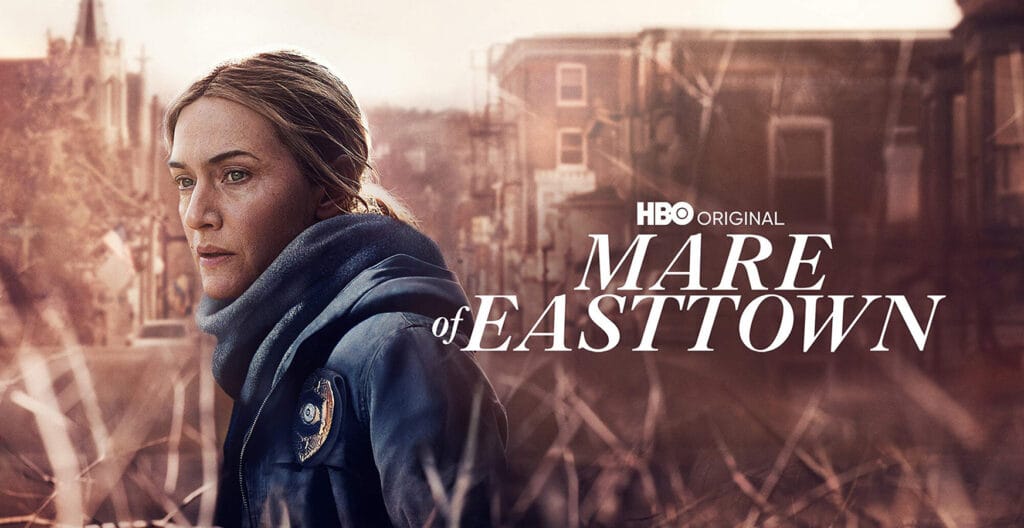
On the face of it, Mare of Easttown is a television show that follows a murder investigation in a small town, a subgenre of crime drama series that we’ve all seen before. A murder mystery or some other serious crime takes place in a small town where everyone knows everyone, the protagonist is usually a detective, who is usually haunted by an unsolved case from the past, and usually a detective from a larger place comes to help, usually with initial resentment on the part of the other detective that turns into affection and appreciation over time, etc. Usually the crime at the center of the story touches each member of the community in some way, as if to suggest that we are all connected, but in Mare of Easttown the crime provides a glimpse into lives that are already broken and regardless of the crimes, mainly because people are living them.
Considering that the following text gives away the plot, if you have not watched this TV show and plan to do so, please read this review after watching it.
The basic plot follows the investigation of the murder of a young woman from Easttown called Erin McMenamin, which may be connected to the disappearance of another Easttown girl named Katie Bailey, who has been missing for a year. The investigation is led by a local detective called Mare Sheehan, who was also born and raised in Easttown.
Since Erin McMenamin’s murder only occurs in the final moments of the first episode, up until then, the episode portrays a day in the lives of several people from Easttown.
A Day in a Life
The first people we meet are the Carrolls. Betty Carroll calls Detective Mare Sheehan before sunrise because she noticed someone sneaking into her backyard in the middle of the night. Betty claims that that person was peeping at her granddaughter while she was taking a shower. Mare wanted to talk to her granddaughter, but she decided to leave her grandparents’ house and move somewhere else. Although this is just a brief moment, in the first scene, of the first of seven episodes (each one hour long), whose importance to the main plot is only revealed in the last episode of the series, it is already a very serious matter. A young woman being forced to leave her home because she doesn’t feel safe there is something that shouldn’t be trivial at all, and that alone says a lot.
When Mare arrives at the police station after visiting the Carrolls’ home, she is ordered to reopen the year-old investigation of Katie Bailey’s disappearance, after Katie’s mother, Dawn, complains during a news interview that nothing has been done to find her daughter. Colin Zabel, a county detective who has solved a similar case in the past, is assigned to assist Mare.
Later that morning, Mare goes to buy an aquarium for her grandson’s turtle. She is looking for something cheap because she doubts “the thing is goanna live very long”. Her grandson, Drew, is four and has ADHD, so she hopes that “owning” a turtle will help. As with the glimpse of the Carrolls’ granddaughter, although the turtle plays a minor role in the plot, it is also very serious. Who knows how many turtles, lizards (it is mentioned that a lizard was already flushed down the toilet after Drew failed to take care of him), hamsters, rabbits, etc. are neglected, if not abused, by young children. Animals are not props or teaching aids, they are sentient beings who deserve moral consideration just like humans. This is far from a central theme of the series, but it is still very important to mention.
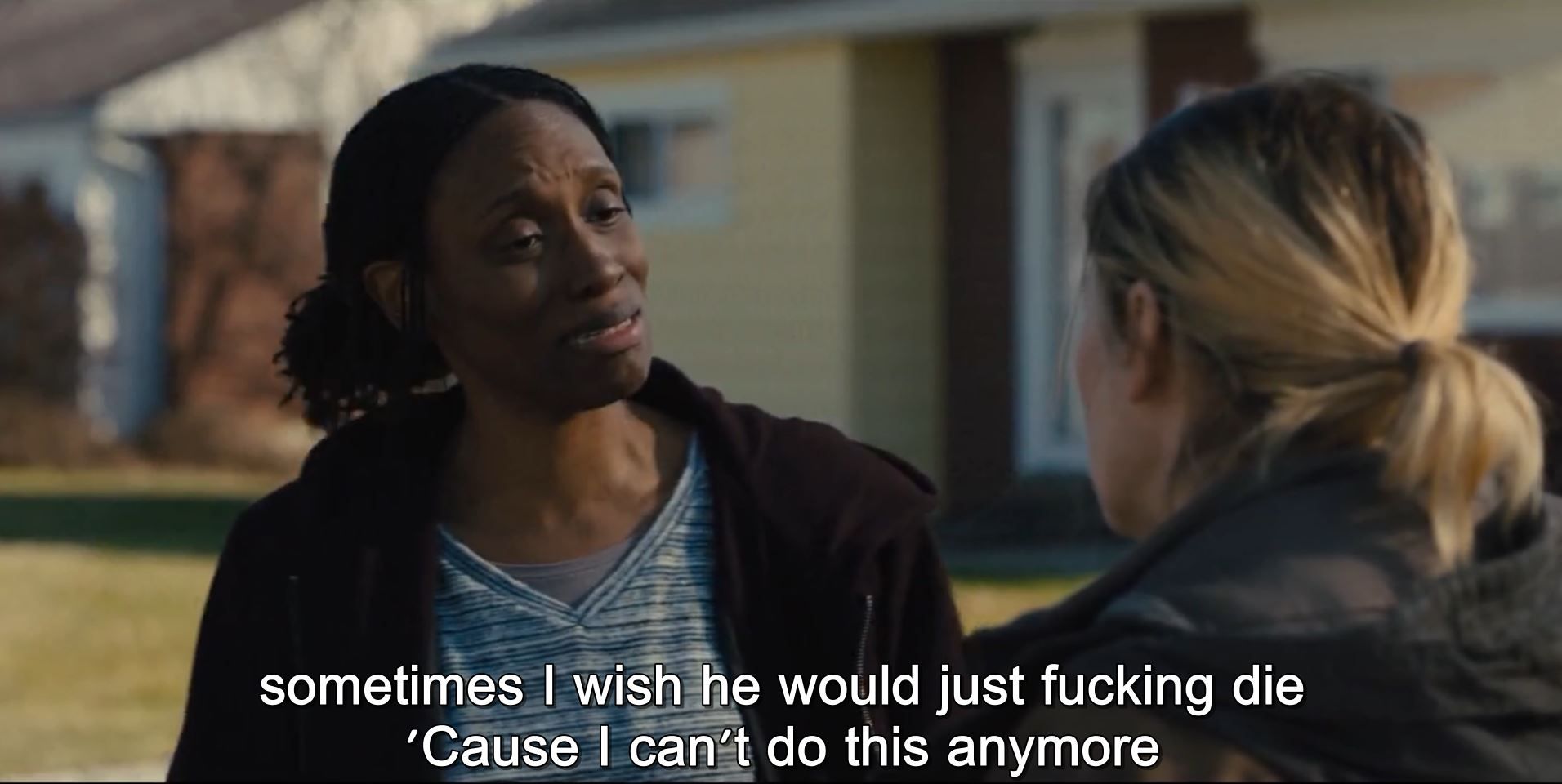
While she is choosing an aquarium, Mare receives a phone call about a burglary in the city. It happened at the home of her friend Beth Hanlon, and her drug addict brother, Freddy Hanlon, who stole from her to buy heroin. Mare spots Freddy on the street and twists her ankle during a chase after him. He runs to his house, where Mare arrests him. His house is frozen because the gas company has turned it off. His sister Beth also comes to his house and punches him in the face while he is handcuffed. In tears, she tells Mare: “I can’t. I can’t fucking take it. I can’t. He fucking lost his job, his family over this shit. When is it gonna be enough? I… I’m sorry. I’m… I am ashamed of myself for saying this, but sometimes I wish he would just fucking die. I do. I really do. Just get it over with. Hey. ‘Cause I can’t do this anymore”.
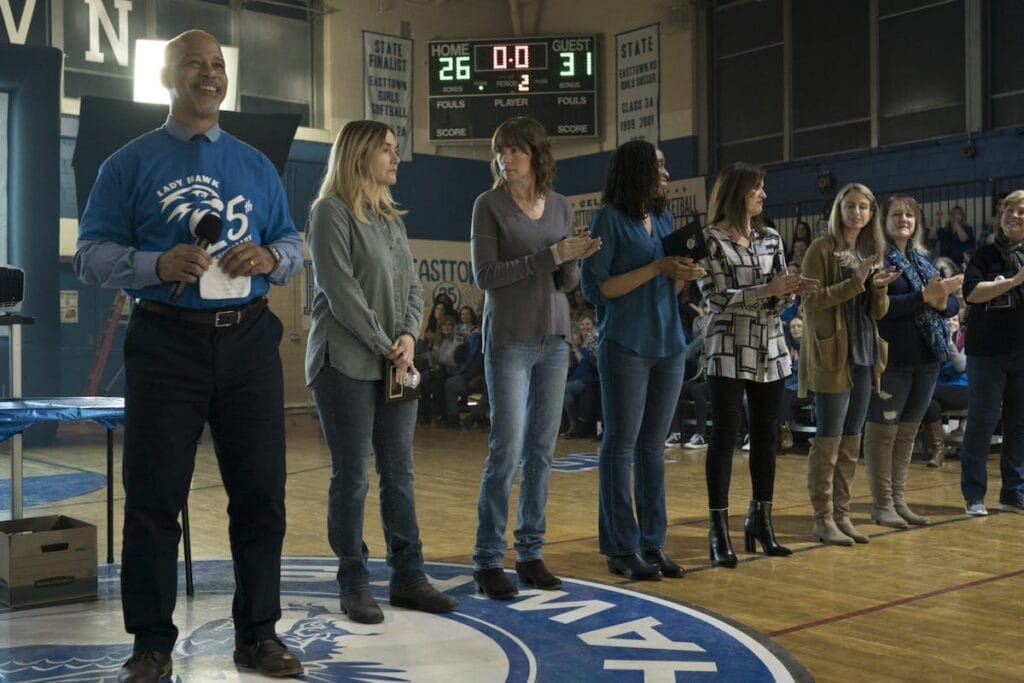
Mare lives with her mother Helen, her teenage daughter Siobhan, and her grandson Drew, who is not Siobhan’s son but her brother Kevin’s son. Kevin killed himself two years earlier after struggling with drug addiction. When Mare returns home that day, she discovers that her ex-husband, Frank, who, of all places, lives next door, is getting remarried and having an engagement party that very evening. It’s the same evening that the town is celebrating the 25th anniversary of winning the state high school basketball championship. Mare is the one who scored the winning basket in the final game, but her family will be absent from the ceremony because they’ll be at her ex-husband’s engagement party, no less.
But what I find interesting about the state high school basketball championship ceremony is who Mare’s teammates were, and how their lives have developed since then. Only one of them has left Easttown and is now living a comfortable life in Arizona after marrying for the third time. The others are Beth Hanlon, Don Bailey, and Mare’s best friend, Lori Ross, who I’ll get to later. I’ve already gone into a little detail about Mare’s, Beth’s, and Don’s lives, but I didn’t mention that in addition to caring for her drug-addicted brother, Beth is also caring for her mother, who has Parkinson. And as for Don, in addition to searching for her missing daughter, who is also a drug addict, Don is raising her missing daughter’s son on her own, and she herself has cancer. So the high school basketball championship is not only, as the announcer said during the ceremony, the proudest moment in the history of sports in Easttown, but also the proudest moment in the personal history of the team members. That game was probably the high point of their lives, their high point was in high school, and since then it’s been mostly 25 years of daily, unglamorous, and often extremely painful struggle in their grim reality. They won a basketball game when they were teenagers, but they’ve lost in life ever since.
Mare comes home very late that night to find her mother awake on the living room couch. She asks her why she’s awake? Her mother replies, “Uh, my legs are acting up again. I feel like I got ants crawling through’em. Don’t ever get old.”
This is another minor event in the whole story, but it’s also a very important one. Helen was obviously sarcastic about aging, but telling her daughter, “Don’t ever get old” from an antinatalist perspective, is not funny at all, but cruel and extremely rude. The sarcasm stems from the fact that there is really no choice but to grow old one day, but it’s because of her decision to create her daughter that now she has no choice but to experience the pains of aging one day.
After a very long and difficult day, Mare finally falls asleep. But she doesn’t get any rest, because as has often happened since her son’s suicide, she has very vivid dreams about him. Mare also has flashbacks of Kevin attacking her, stealing from her to buy drugs, and yelling at her that he hates her.
In the first episode, we also meet Erin McMenamin and the people in her life, in what turns out to be her last day alive.
Erin is a teenage mother, living with her alcoholic and abusive father Kenny. Her son DJ has a serious and dangerous ear infection that requires immediate surgery, but Erin and DJ’s father, Dylan Hinchey, don’t have the money. When Dylan arrives with his new girlfriend Brianna Delrasso to take DJ for the weekend, he argues with Erin about the surgery. Brianna threatens Erin to “stay away from her man.” And Brianna doesn’t make do with that threat, she also pretends to be a guy and contacts Erin online, asking her to meet her that night in the woods. Brianna ambushes Erin and beats her in front of Dylan and other teenagers. Erin manages to escape into the woods.
All this is before the crime at the center of the series even occurs.
The next morning, Erin is found dead in a nearby creek, naked, with a large blow mark on her forehead.
I won’t go into the rest of the series’ 6 episodes in a similar detail, but you get the idea. From here on out, I’ll focus only on essential plot details and, of course, important antinatalistic aspects.
Life Falling Apart so Spectacularly
One important antinatalist aspect concerns Mare’s grandson. Drew is having ticks just like his father had when he was his age. Mare notices some disturbing similarities between Drew and Kevin, who has suffered all sorts of problems his entire life, been diagnosed with all sorts of illnesses, and been treated with all sorts of medications. Mare fears that some of Kevin’s problems are genetic and have been passed on to Drew. Later in the show, Mare goes to therapy, during which she reveals that, like her son, her father also struggled with depression and committed suicide. This happened when she was 13. The therapist asks her how this made her feel, and Mare replies, ” Like I wasn’t enough for him” Mare also shares with her therapist her own struggles with depression, and her fear that Drew would end up like her father, like her, and like her son. I’m not sure if Mare and Frank decided to create another human being when they were already aware of the difficult problems the first human they created was facing, but given the ages of Kevin and Siobhan, it’s likely that they did. And Mare and Frank must have been aware of Kevin’s problems when he decided to create a new person, and they must have been aware of the issues of Kevin’s partner, Carrie Layden, who is also a drug addict, and yet they let it happen (although in their defense they probably didn’t have that much influence on them). Drew’s father committed suicide when he was two years old and Drew’s mother was in rehab for most of her life. Drew’s starting point in life is terrible, and he may have genetically inherited some serious mental health issues from the parents he barely met.
Drew’s grandmother, Mare, is practically his mother. But now that Carrie is out of rehab and a recovering addict, she asks for full custody of Drew. Mare, who refuses to accept this, steals drugs from the police evidence locker and plants them in Carrie’s car. The police chief figures this out and suspends Mare from the force.
Before being suspended, Mare incidentally meets her colleague the county detective Colin Zabel in a Bar. He also had a high school reunion, and it appears that Zabel’s life also didn’t turn out as he expected when he was back in high school.
Their whole conversation in that bar is worth noticing so here it is, taken from episode 3 after 49:15 minutes:
“Zabel: Well, howdy-do there, partner. How are ya?
Mare: Hey. What are you doing here?
Zabel: Uh. Drinking. It’s the, uh, post-game with the boys. We had our, uh, fifteen-year high school reunion over tonight at McGillin’s. It’s, uh, Ridley High Raiders, class of ’05. What are you doing? What about you? What’s going on?
Mare: I’m just trying to drink away a bad thought.
Zabel: Let me help you. Uh, bar guy! Sorry, I won’t do that again. Uh… Can we get one more for the milady, and, uh, I’ll do one of those. And, um… I’ll do a shot of Jameson. Thank you.
Mare: So… how was it? The, uh, reunion?
Zabel: Uh. It was good. It was, uh… It was pretty awful. My ex was there. Almost ex-wife.
She, uh…She called it off two weeks before the wedding. But… what’re you gonna do?
Mare: I’m sorry, Zabel. That’s, uh… I’m sorry.
Zabel: It’s okay. It’s just like…You know?
Hey. Here’s to, uh…To uh, being us.
I still don’t…I still don’t know what happened, you know? I woke up one morning and she goes, “Nope.
Not in love with you anymore.”
Okay. Just…let me put my bagel down. You know what I mean?
I’m, uh… I don’t know. I’m getting to that age, right? Forgive me, but I’m…Like, I’m getting to that age where I’m starting to look at my life and I’m going…”Well, here’s what I thought it would be… and… here’s what it actually is.”
Am I making any fucking sense?
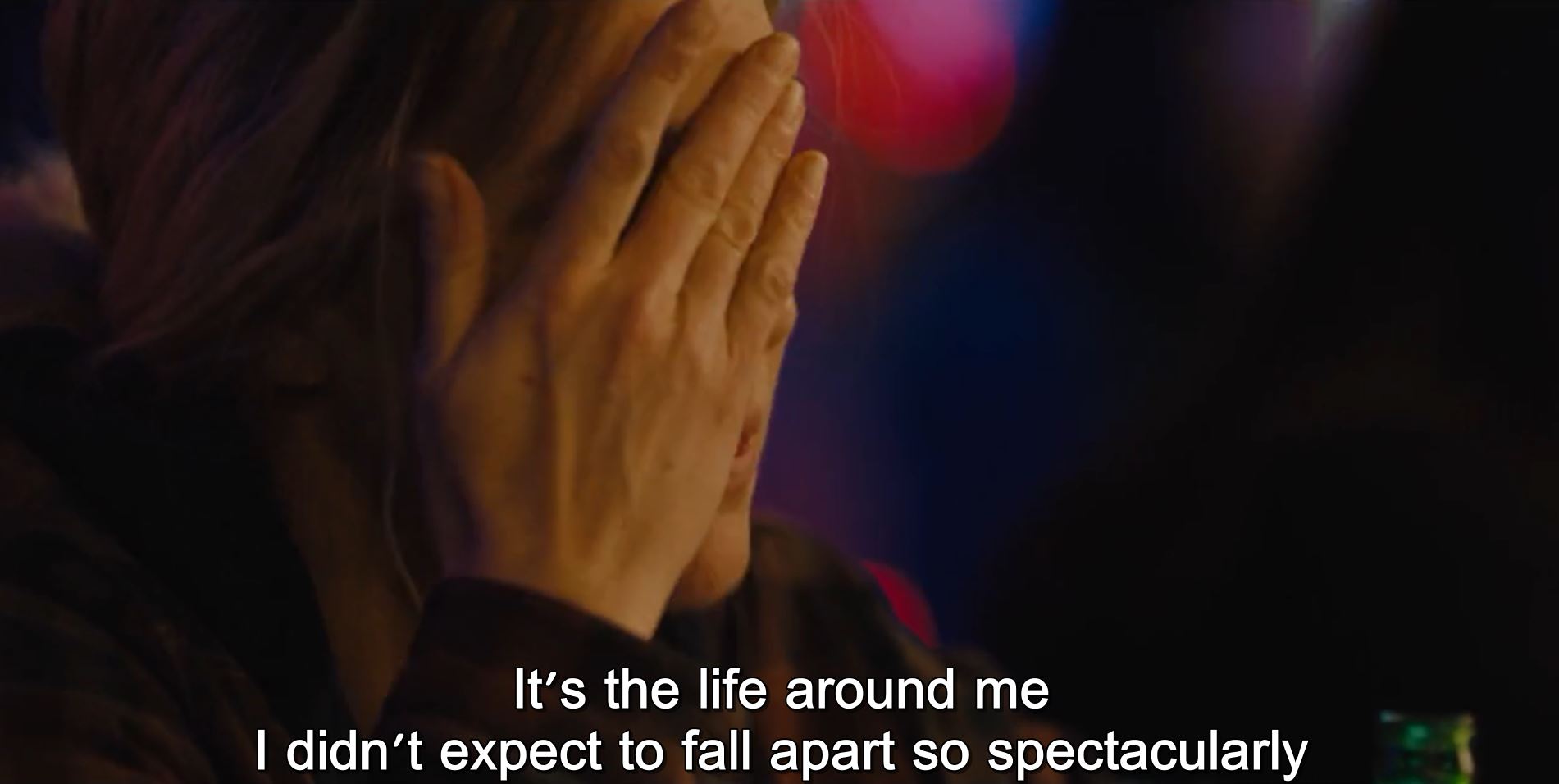
Mare: Well… I always imagined I’d be a cop. It’s the life around me I didn’t expect to fall apart so spectacularly.
Zabel: Sorry about your son. I bet you were a good mother.
Mare: No. No, I wasn’t.”
Just as Screwed up as Anyone Else
Like other crime dramas, in this show, viewers are led to think of different characters as prime suspects as the investigation progresses. I won’t bother you with who and why, as much of that is irrelevant to our specific matter. But it’s important to note that Erin’s best friend, Jess Riley, admitted that Erin told her that Dylan wasn’t the father of her baby. Erin lied to Dylan because she couldn’t say who the real father was, and because she was dating Dylan at the time and his parents are good, responsible people, so she trusted them to take care of her child even if Dylan didn’t. At this point, we don’t know who the father is.
Meanwhile, another girl is missing. This is Missy Sager, described as a talented and promising girl who graduated top of her class in high school where she also excelled in gymnastics and field hockey and was a member of the student council. After high school, she enrolled in a nursing program at a university. In freshman year, an old lady ran a stop sign and hit Missy while she was crossing the street. Missy broke her hip. Shortly after, she began taking oxycodone, and then morphine, and to the point of her becoming a drug abuser until she reached a state of addiction. Missy worked in the sex industry to support her addiction. One night, she is picked up by a man in a truck who kidnaps her and locks her in his attic. Missy was not alone in the attic; Katie Bailey has also been locked there for a year.
One short note about Missy’s tragic life. Aside from the fact that any life, even that of a promising and talented young woman, can easily be completely destroyed, I don’t think the show’s creators randomly chose this particular accident as the trigger for the destruction. And even if they did, we shouldn’t treat it as random. The common image is of young, irresponsible or drunk drivers hitting the elderly while crossing the street, and of hip fractures as a common injury for the elderly. I think the seemingly common story was deliberately reversed here to show that such things can happen, and often to young people. They could have chosen any other injury that caused Missy to start using oxycodone. For example, even though Missy is a very minor character in the show, it was important to let us know that she was involved in gymnastics and field hockey, two activities with a high potential for injury, and yet she was injured while crossing the street. So I think they chose on purpose a situation where an old woman destroyed a young life, all the more so accidently.
Back to the plot, thanks to the resourcefulness of another girl who was attacked by this man, and somehow managed to escape and write down part of his license plate, Mare (who is still suspended) and Zabel, have a description of the man, his truck, and part of his license plate. While waiting for the results of the license plate check, Mare and Zabel had another interesting conversation relevant to our topic, during which Zabel admits that he didn’t really solve the case that led to his promotion. Again, this conversation is worth mentioning in full, so here it is, taken from episode 5 after 45:55 minutes:
“Mare: Hey, I’m sorry for the other night.
Zabel: You don’t have anything to be sorry for, Mare. Just being honest about how you feel.
Mare: I just can’t do all of that.
Zabel: All of what?
Mare: What you want.
Zabel: How do you know what I want?
Mare: My life’s a shitshow, Zabel. I’m about to lose custody of my grandson.
I’m still working through unresolved issues from my son who killed himself.
And, uh, my ex-husband basically lives in my backyard, so you’re right, I don’t know what you want, but… I’m sure it’s not that.
Zabel: You could have just said that when I asked you out.
Mare: I know. And I should have. But I just, uh…even if they did kick me off the fucking thing, it’s still my case. You know what it’s like when a case gets inside you like that? It’s not a switch you can just turn off.
Zabel: I didn’t solve that case.
Mare: What?
Zabel: The girl from Upper Darby. Her parents hired a P.I. ’cause we weren’t working fast enough. Some fucking drunk ex-cop looking to make some extra cash calls me out of the blue one day, says he wants to compare notes. Thinks he’s got something. I ignored it. Couple weeks go by, I’m in the area, so I drop by his house. And his sister’s there packing up the place. Says he’s in hospice. His liver gave out… but help myself to any files. So… find one marked “Zabel”… I take it home. Son of a bitch, if he didn’t piece it all together. Neighbor gave an alibi that didn’t check out. He caught it… I missed it. I filed a search warrant, we hit the perp’s house, find the poor girl’s shoe in his bedroom, guy confesses… case closed.
Mare: Why’d you do it?
Zabel: I don’t fucking know. I think I really just wanted to do something great… for once in my life.
Mare: Makes you feel any better, I hid drugs on my grandson’s mother. That’s why they put me on leave.
Zabel: Wait, you serious? Holy shit.
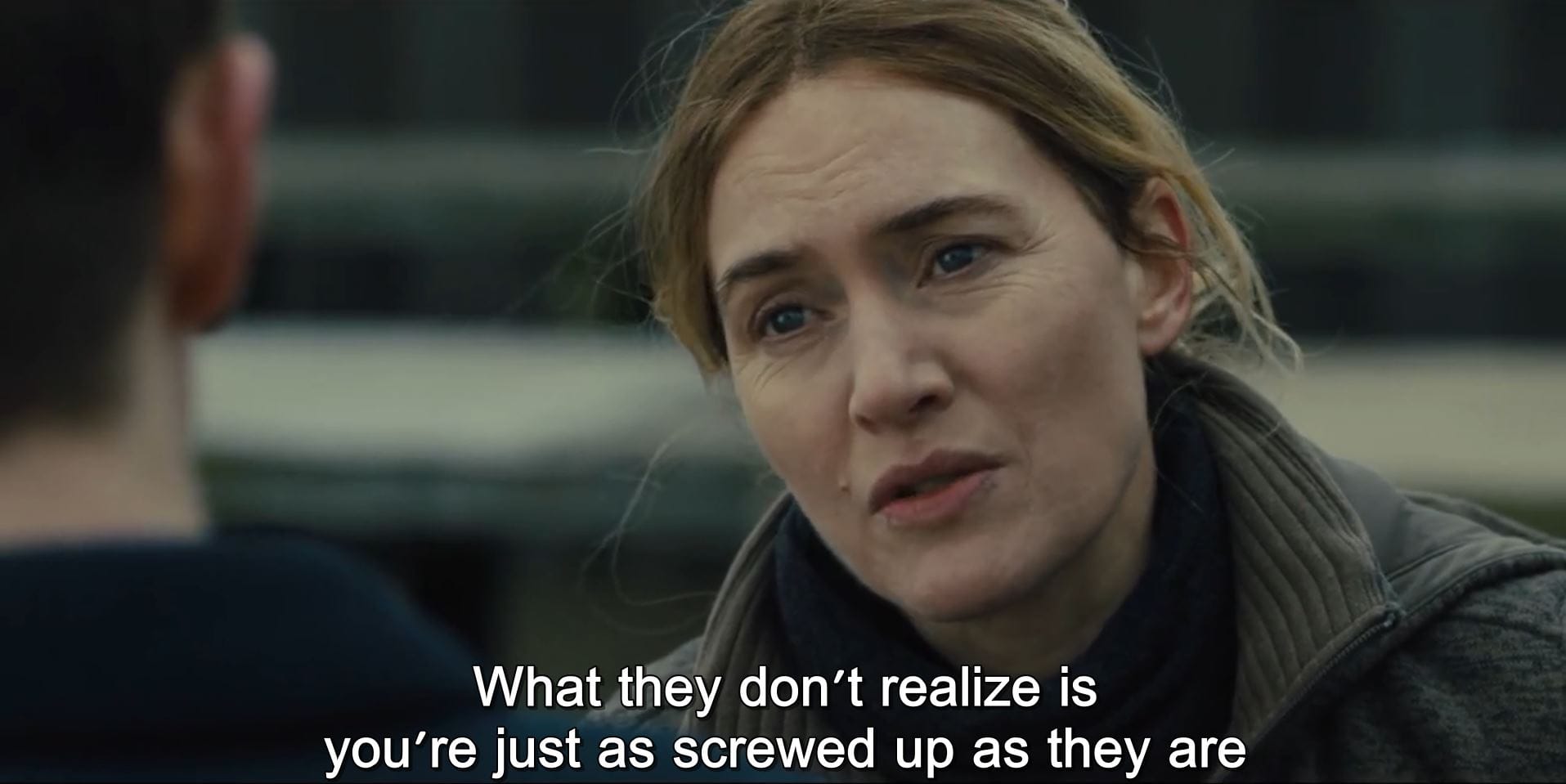
Mare: Doing something great is overrated. ’Cause then people expect that from you… all the time. What they don’t realize is you’re just as screwed up as they are.
Leave my Family Alone
Following the results of the license checks, Mare and Zabel locate someone who perfectly matches the description of their suspect, town’s resident Wayne Potts, and arrive to question him. A second before Zabel draws his gun after realizing that it is indeed their man, Potts is ahead of him and kills Zabel. After a shootout inside that house, Mare manages to kill Potts and free the girls.
Since Wayne Potts is an ultimate embodiment of evil, it may make him much scarier in itself, but less scary generally speaking, because we believe that such people, who are the embodiment of “pure evil” are quite rare, and therefore less relevant to our real lives. Having said that, first of all, unfortunately evil people like Wayne Potts do exist. And much more unfortunate, is that people who kidnap and rape girls for a “short while “, or “just” rape girls without kidnapping them, is something that happens all the time and therefore has relevance in every sense.
Second, and in relation to this particular story, Potts kidnapped Katie and Missy, but he wasn’t the one who killed Erin. Erin’s killer is far from the ultimate embodiment of evil. And in a way, that makes Erin’s murder all the more terrifying and certainly more relevant to our issue.
Since I don’t at all see this TV show as a murder investigation, it supposedly doesn’t really matter, especially given our specific interest here, who Erin’s killer is. But in this case, given the identity of the killer, it does matter a lot.
It turns out that Erin was having a romantic relationship with one of her father’s cousins, John Ross, who is also the husband of Mare’s best friend, Lori. John is the real father of Erin’s son, DJ. Not only is he married, and has a son out of wedlock, he also created this child with a minor who is his relative, making this relationship incestuous. So John would do anything to keep it a secret. John committing a very serious crime to bury other very serious crimes, one of which is creating a person all the more so with a very bad starting point, would have been a strong antinatalist case as it is, but it is not John who murdered Erin, it was his 13 year old son Ryan who did it.
Ryan was aware of his father’s relationship with Erin. Five years earlier, John had had another affair that temporarily separated him from Lori. Ryan, who had suffered from his parents’ separation, did not want it to happen again, and this time probably forever. On the night of the murder, Ryan saw his father making a phone call and realized it was Erin. He then saw a text message on his father’s phone from Erin asking him to meet her at the park. Ryan answered his father’s phone that he would come, and before he got there, he stopped at Mr. Carroll’s storage room to get a gun that he knew was there. Ryan’s plan was simply to scare Erin into staying away from his family. But things got out of hand when Erin tried to take the gun from him and after a brief struggle, he shot her. Ryan panicked and called his father, who called his brother Billy to help him, telling his son that he was taking care of it. By taking care of it, he meant moving the body to the woods, knowing that Erin herself and many other children were there that night, and therefore hoping to arouse suspicion against the other children instead of him.
When John felt suspicions starting to creep in, after his wife Lori told him she saw him tell their son Ryan that it was their secret, and after his father told him that he saw his brother Billy covered in blood the night of the murder (and of course told no one except his other son and only after some time to protect his son even if he was involved in the murder of a young local girl and possibly the disappearance of two other girls), and after Mare realized a few things that made her think it might be Billy, John asked Billy to take the blame. John’s argument is “I have a family and you have no one”, an argument that shows that in many cases family is not exactly compatible with justice, ethics and truth.
Billy agreed. But John wasn’t sure enough so he asked his brother to join him on one last fishing trip before he turned himself in and went to prison. Billy sees that John has packed a gun and realizes that his brother plans to kill him during this trip to make sure his son is safe. That is, safe from paying the price for a crime he accidentally committed while trying to protect his family from the consequences of his father’s crimes.
So unlike the kidnapping of Katie and Missy, which was carried out by an ultimate villain, Erin’s murder and the other serious harms that occur in the series are committed by “ordinary people.” In fact, Erin’s killer is not even ‘ordinary people’, but an ‘ordinary kid’ who felt the need to protect his family.
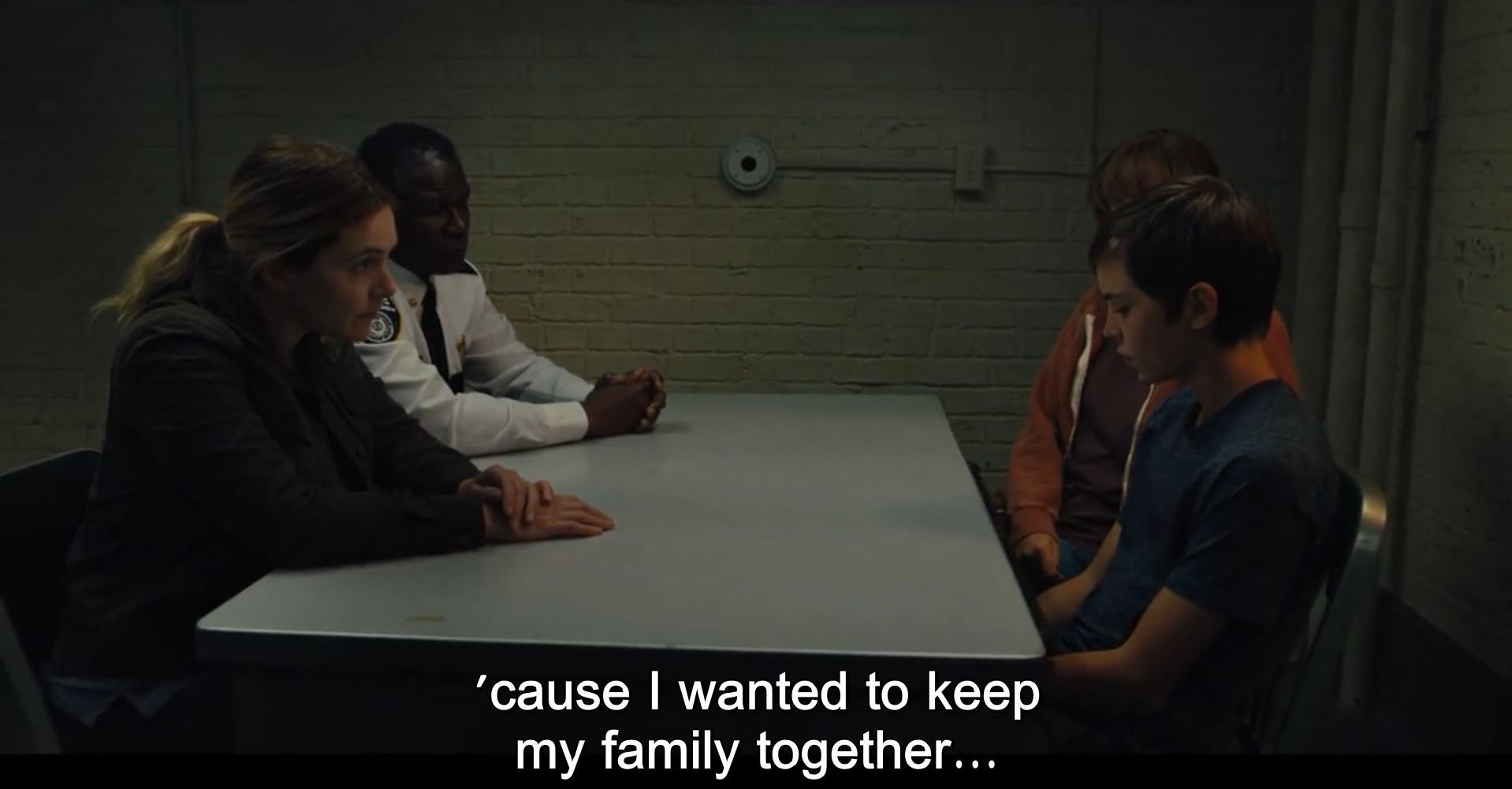
Ryan murdered Erin to protect his family, and his family protected him even though he did a terrible thing because of a terrible thing his father did. And that shows that in a way, starting a family is a moral bending. It was Ryan who committed the murder, but to protect their family, many others lied, cheated, covered up, and led investigators to believe that others were the ones who committed the crime. The Ross family saw innocent people harmed, and in a number of ways, from being investigated, to being under serious suspicion of a very serious crime, to being forced to take a paternity test, to being arrested, and even being shot (Kenny was sure that Dylan had murdered his daughter, so he kidnapped him and shot him), and yet they did it without hesitation. They were willing to let many people get hurt as long as it wasn’t their family. And once danger arrived at their doorstep, immediate family came first at the expense of extended family. A brother with a family is worth more than a brother without a family, even though in this case it is the brother with a family who should be fully responsible for the whole mess, and the brother without a family should be responsible only for helping his brother cover up a murder.
This is one of the three main reasons why I find Mare of Easttown, probably unintentionally, a very antinatalist TV show: as just argued, it demonstrates how family can be a dangerous and highly immoral thing, and as argued earlier and now I’ll elaborate on that, the series portrays life as extremely disappointing at best and absolutely terrible at worst, and it portrays family relationships as extremely disappointing at best and absolutely terrible at worst.
Everybody Hurts
The obvious and immediate antinatalist aspect of Mare of Easttown may be that people’s children may be kidnapped and daily raped by a psychopath, be murdered, or be murderers. But in my view, that would be to miss the deeper antinatalist aspects which are exemplified in the lives of almost every character in the series.
Mare of Easttown is supposedly a crime drama, but in its case, the crime that takes place in the town is just a window into the drama that is the lives of the people in this town. Everyone in this town suffers in life, regardless of the crimes at the center of the series.
Mare Sheehan, the show’s protagonist, suffers from depression, the open wound left by her son’s suicide, the searing hole left by her father’s suicide when she was 13, dealing with her son’s drug addiction, custody battles over her grandson, her grandson’s problems, her ex-husband who remarried and lives right next door, and her terrible relationship with her mother and daughter.
Mare Sheehan’s mother, Helen, suffers from the hardships and pains of aging, and her terrible relationship with her daughter. The two get on each other’s nerves all along the show, and their tense relationship reaches a boiling point when they briefly confront each other about their relationship in the final episode. It begins with Mare telling Helen that she wasn’t as soft with her as she was with Drew, and goes on as follows:
“Mare: If that had been my Band-Aid as a kid, you would have told me to shut up and fix it myself.
Helen: Oh, yeah. Is that something you talk about in therapy?
Mare: Is it all right if I do?
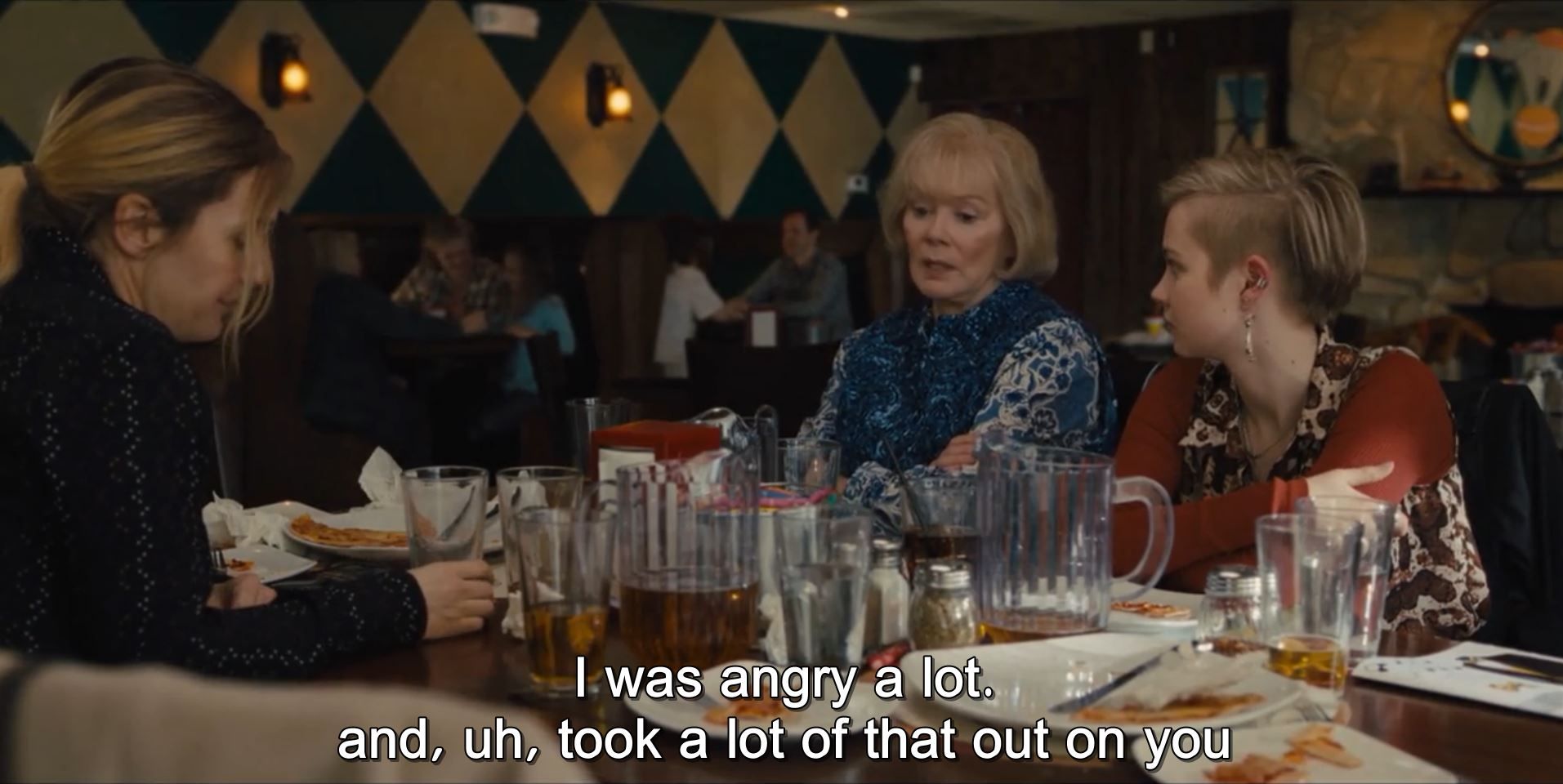
Helen: Of course. Mm-hmm. Truth is, I was angry a lot. I was angry… (Sighs) …that your father wasn’t the person I thought I’d married, and, uh, I was angry that I couldn’t fix him, and, uh, took a lot of that out on you. I’m sorry, Mare.
Mare: Well… I forgive you, Mom.
Helen: Good. Because I forgave myself a long time ago.
Mare: Mom.
Siobhan: Gran. (Helen sobs) Gran, don’t get upset. Gran, please.
Mare: No. Come on. Let’s– Let’s not do that right now.
Helen: Okay. Okay, I’m sorry. I’m sorry. Just that’s– that’s what I wish for you, Marianne. Just that you can forgive yourself. For Kevin. It wasn’t your fault. It wasn’t your fault.
Mare: Yeah. I’m gonna… use the bathroom.”
Siobhan, Mare’s daughter, is not a teenage mother, nor is she depressed, nor is she a drug addict, but a fairly talented young woman who is leaving Easttown to study in Berkeley. Siobhan may get out of Easttown but it is hardly likely that she will get Easttown out of her. She was deeply hurt by her brother’s suicide and by being the one to find him. In fact, she got the scholarship from Berkeley based on a film she made about his suicide. She is angry and resentful of her mother for finding her brother dead instead of her mother finding him. She has told her mother that she hates her for it. And she hates her for not talking to her about Kevin.
Speaking of which, Kevin Sheehan has suffered for years from depression and various other mental health issues, as well as drug addiction.
Kevin’s life partner, Carrie Layden, is also a drug addict and as a result, she is unable to raise their son.
And their son Drew suffers from ADHD, hyperactivity, tics, sleep disorders, and instability in his life. He barely sees his biological mother, he lost his father when he was two years old. He may not remember him, but he knows he had a father and that he is gone. He named his turtle Kevin.
Beth Hanlon as earlier mentioned, takes care of her mother who suffers from Parkinson and her brother who suffers from drug addiction. Alone.
Beth’s brother, Freddy Hanlon, was a drug addict, for whom stealing from his sister wasn’t even his lowest point. One day he called Don Bailey anonymously and telling her that for $5,000 he would give her information on her daughter’s location. When Don arrived at the meeting point, Freddy tried to steal her bag and run away, but not before Don recognized it was him.
Freddy died of an overdose in his freezing house.
Colin Zabel, as mentioned earlier, felt like a failure and a fraud, and was deeply disappointed with how his life had turned out, a life that ended tragically by a psychopath who murdered him in the line of duty.
Judy Zabel lost her son to a psychopath creep.
Mark Burton, the town’s pastor, was suspected of Erin’s murder because her phone records showed that he was one of the last people to speak to her. During the investigation, it turns out that Mark also met Erin the night she was murdered. She asked him for a ride from the woods to the park where she was supposed to meet John. And Mark became the prime suspect after it was learned that he had been transferred to Easttown from another town after allegations of inappropriate behavior towards a minor. We don’t know what happened in his former community, but when the residents of Easttown heard about the allegations, it was enough for them to physically attack him. We know that that night Mark was just trying to help Erin, but due to the previous allegations, he panicked and didn’t tell the police that he gave Erin a ride to the park, and that he threw her bike into the river. But he didn’t hurt her.
Even senior man Glen Carroll who lost his wife Betty during the show, told all the people who came to his wife’s funeral that he cheated on her with Helen.
Later on he called Mare for another issue and they had the following short heart breaking and hopefully eye-opening conversation:
Mare: “Is everything all right, Mr. Carroll?
Glenn Carroll: No. You know, ever– ever since Betty passed away, I– I– I just can’t seem to keep anything together. You lost your son recently.
Mare: Yeah. Yeah.
Glenn Carroll: Does it get any easier?
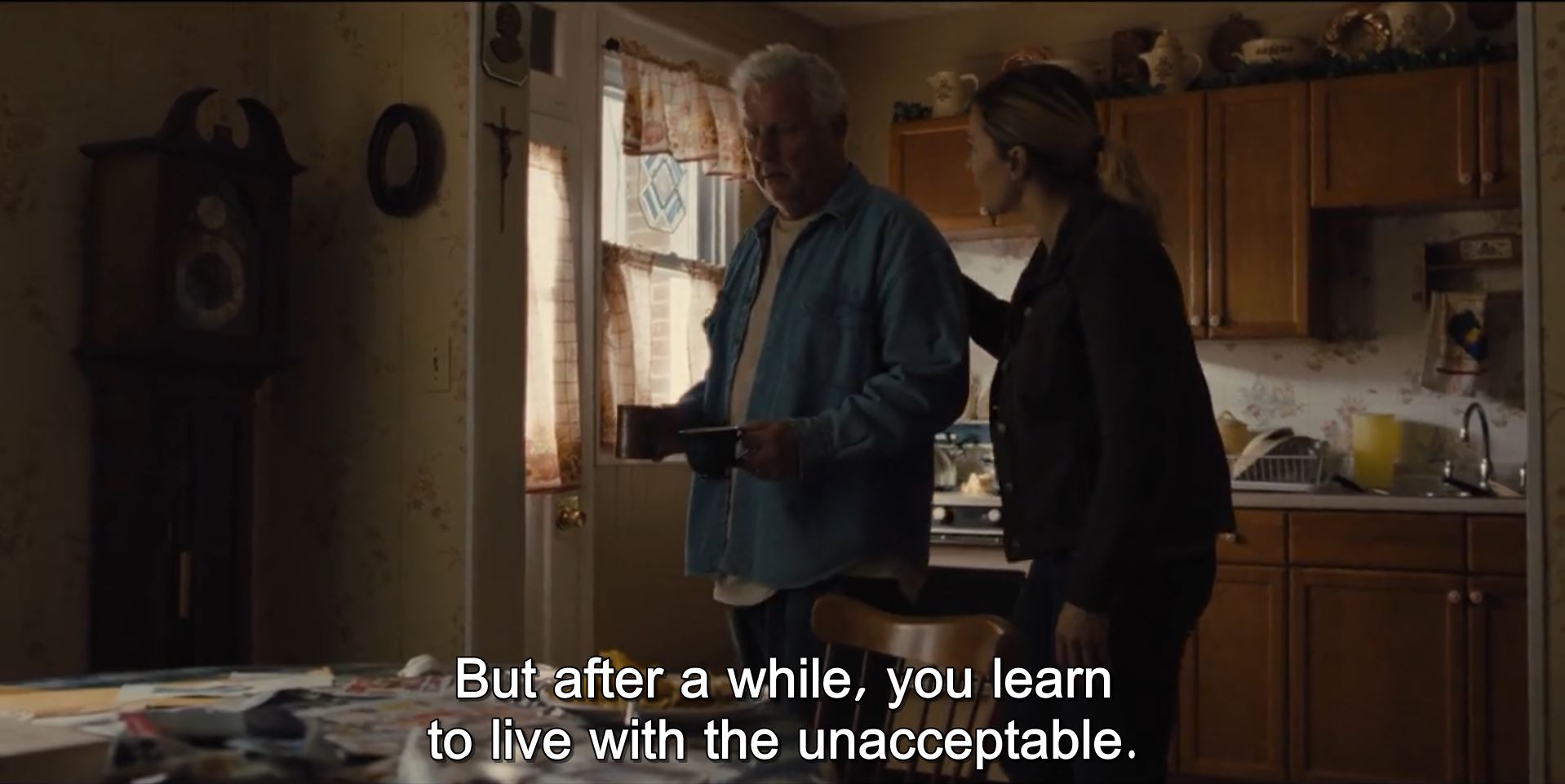
Mare: No. But after a while, you learn to live with the unacceptable. And you realize that you still need to put food in the pantry, pay the electric bill, and wash the bedsheets. So… you sort of just find a way to live with it.”
Although he was a bully who caused a lot of harm, since in this part of the text I review the harm people of this town endure, in this context I think it is important to mention that Dylan Hinchey was a prime suspect in the murder of his ex-girlfriend, he discovered that she actually loved someone else, his ex-girlfriend’s father shot him and he is rehabilitating from the injury, and
that whom he was sure is his own son actually turned out to be someone else’s son.
Dylan’s parents, Steve and Katherine Hinchey, are very caring and empathetic people. They are very attached to DJ and were willing to take care of him even after it was discovered that Dylan was not his father. But DJ was taken from them because his biological father, John, wanted his wife Lori to raise him.
Like her partner Dylan Hinchey, Brianna Delrasso is also a bully who has caused a lot of harm, but in this specific context it is important to mention that she was also suspected of Erin’s murder, lost her partner Dylan, lost the opportunity to go to college because of the investigation, and is considering working at a local beauty salon instead. It seems like, like many others, she will never leave town.
Moira Ross, the daughter of John and Lori, suffers from bullying at school by kids who make fun of her because of her Down syndrome. And of course, her family is completely falling apart.
Ryan Ross is only 13 years old and he’s going to be in juvenile detention for a long time, and he’ll be a murderer for the rest of his life. And of course his family is completely fallen apart.
John Ross has lost his family and his reputation, probably forever, and he’s going to jail for a long time.
Lori Ross, who of all the players on this basketball team seemed to have a relatively good life, is married to a disloyal man who is in love with a minor who is also his relative. After agreeing to her husband’s request to raise his son DJ, she’s raising three children: her oldest daughter who suffers from bullying due to her Down syndrome, the child her husband fathered with a minor who is his cousin’s daughter, and the child who murdered this minor, who is, ironically and super disturbingly, his brother’s mother.
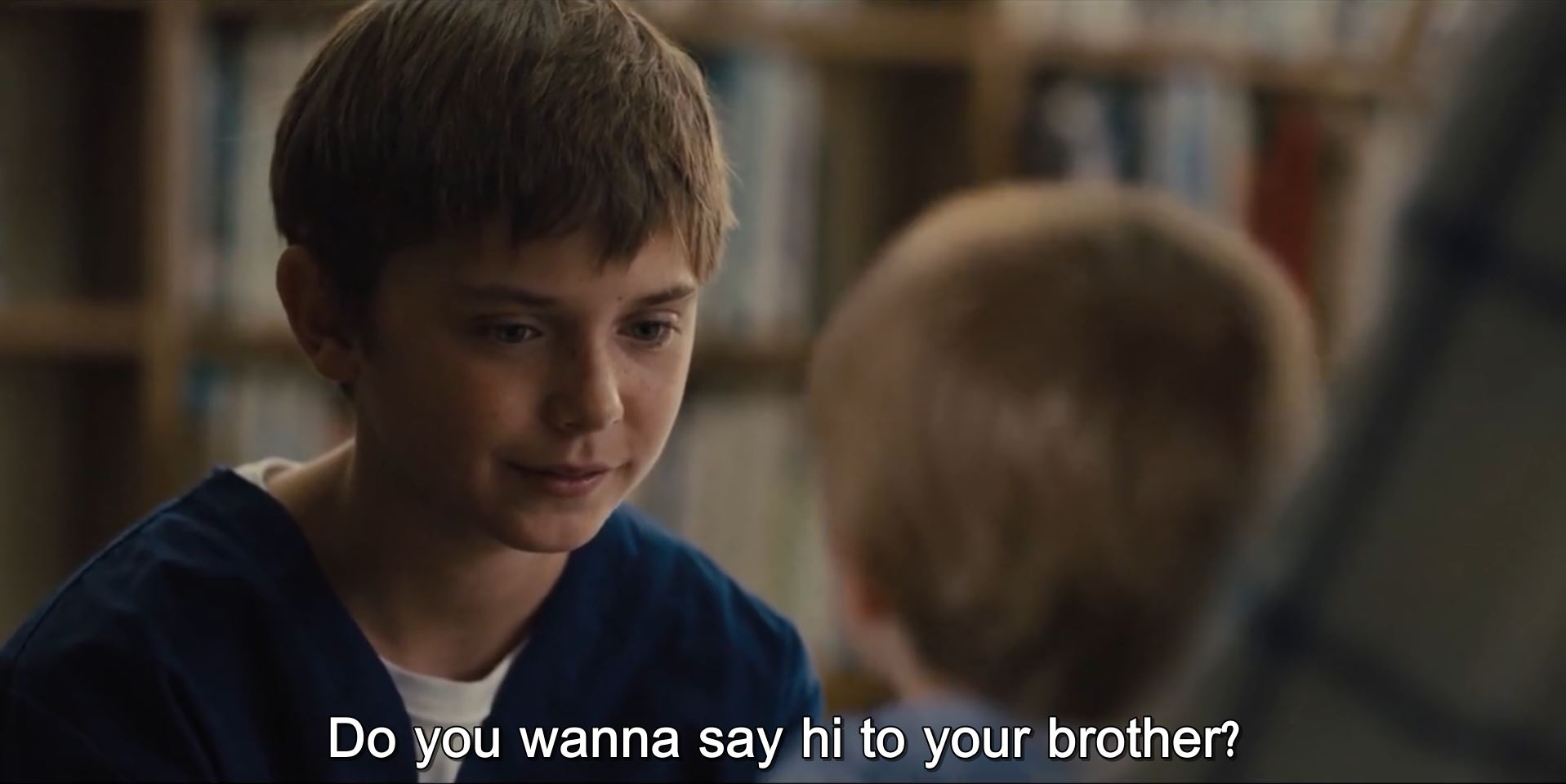
This is not a TV show about a missing girl and a murdered girl in a small fictional town in Pennsylvania, but a glimpse into a generic town in our real world, where broken people are forced to live broken and hopeless lives, while, and not as consequence of one girl from that town disappearing and another girl being murdered.
The crimes allow us to see all the broken pieces together, but they did not cause all the pieces to break.
Even the lives of the people most directly involved in the crimes themselves were broken before they happened.
Don Bailey, Katie’s mother, who has been missing for over a year, has cancer, and her daughter was a drug addict before she was abducted. We don’t know where her daughter’s father is (or if he even exists) or where her grandson’s father is (or if he even exists), and she works at the local gas station convenience store. She was also part of the praised basketball team, which means that the peak of her life was also in high school, and from there everything went downhill.
Erin’s father, Kenny McMenamin, also had his life broken before his daughter was murdered. At the beginning of the show, we see him coming home from work, and when his daughter asks him if he had a good day, he says, “I wish you would come to work with me one time and see if you can find anything good about it” He then asks her if her boyfriend, Dylan, who is supposedly DJ’s father, gave her money for the baby’s ear surgery because he’s frustrated with his care. He yells, “I’m paying for the wipes. I’m paying for the diapers. I’m paying for the formula!” Like many people in this town, the first thing he does when he gets home is drink. We’re told he has a drinking problem and it’s implied that he’s often violent. Kenny also lost his wife a few years ago. So his life was already broken by other factors. Kenny decides to avenge his daughter’s murder and shoots Dylan, convinced that he’s his daughter’s murderer. He didn’t think or care at that moment that this decision would leave his grandson DJ without a mother and without a father, and with a grandfather in prison.
And Mare, as the detective who has been unable to solve Katie’s disappearance for the past year, is indeed haunted by the past, but it is not the unsolved crime that haunts her, but the suicide of her own son, who was a drug addict. So in her case, too, life was already badly broken. In fact, even Katie and Missy, who undoubtedly had the worst thing happen to them (kidnapped, imprisoned, and raped on a daily basis), were already living terrible lives before they were kidnapped, as they were both drug addicts who worked as prostitutes to support their addiction.
And last but not least is DJ McMenamin. DJ currently suffers from a serious and dangerous ear infection, and from the constant change of different care givers. But in the future, as he grows older, he will be deeply and probably irreversibly harmed after realizing who his real mother is and what happened to her, who his real father is and where he is and why, that his brother is his mother’s murderer, and that his de facto mother tried to cover up the murder of his real mother.
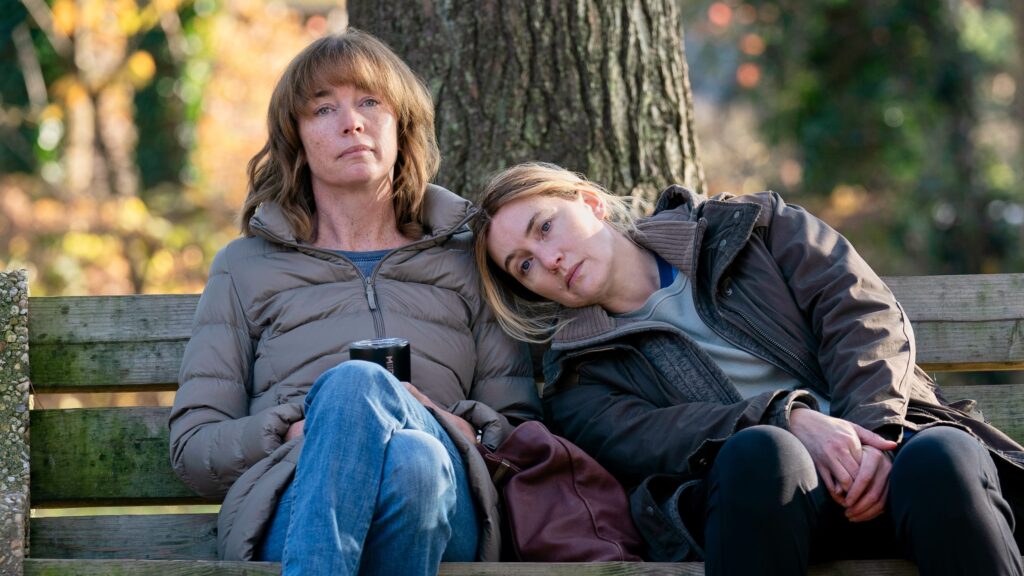
Although Mare of Easttown is rightly technically catalogued as a crime drama, it is not a show about a crime, it is a show about the drama of life. It is a show about people’s relationships with themselves, with their families, with their friends, with their community, with the truth and with the grim reality of life.
Mare of Easttown is not a television show that invites its viewers to see how a serious crime and the investigation that follows can tear apart the lives of so many people in a small community, but a show that invites its viewers to see the already torn lives of people in a small community, regardless of the investigation of a serious crime. Unlike most other television shows in this genre, which depict how fragile human life is, and how one crime can damage an entire community and people’s false sense of security, Mare of Easttown simply depicts how fragile human life is. The lives of the residents of Easttown were not broken by the crimes or by the consequences and secrets revealed in the investigations, their lives were broken long before, we just don’t notice if there is no dead body. And there are many dead bodies in Easttown, only most of them are of people who are still alive.
Mare of Easttown is very interesting and relevant from an antinatalist perspective because it depicts a portrait of a typical town in our world, and therefore the lives of many people who are forced to live in this world.